




In a report by the Association of Chartered Certified Accountants, it was revealed that purpose has been increasingly influencing career decisions among finance professionals.
Many finance professionals are now prioritising employers that take clear positions on environmental, social, and human rights issues.
In numbers, the report found that 69% of finance talent want roles that deliver positive social impact, and 63% want to help tackle environmental and climate challenges. Meanwhile, 34% say their current role helps address climate issues, while 45% aid in social impact responses.
As for employer reputation, the report revealed that 75% are drawn to organisations with strong social and human rights records
With this at hand, it is only fitting to find an answer to the query on how this reshapes the expectations placed on finance teams and CFOs today.
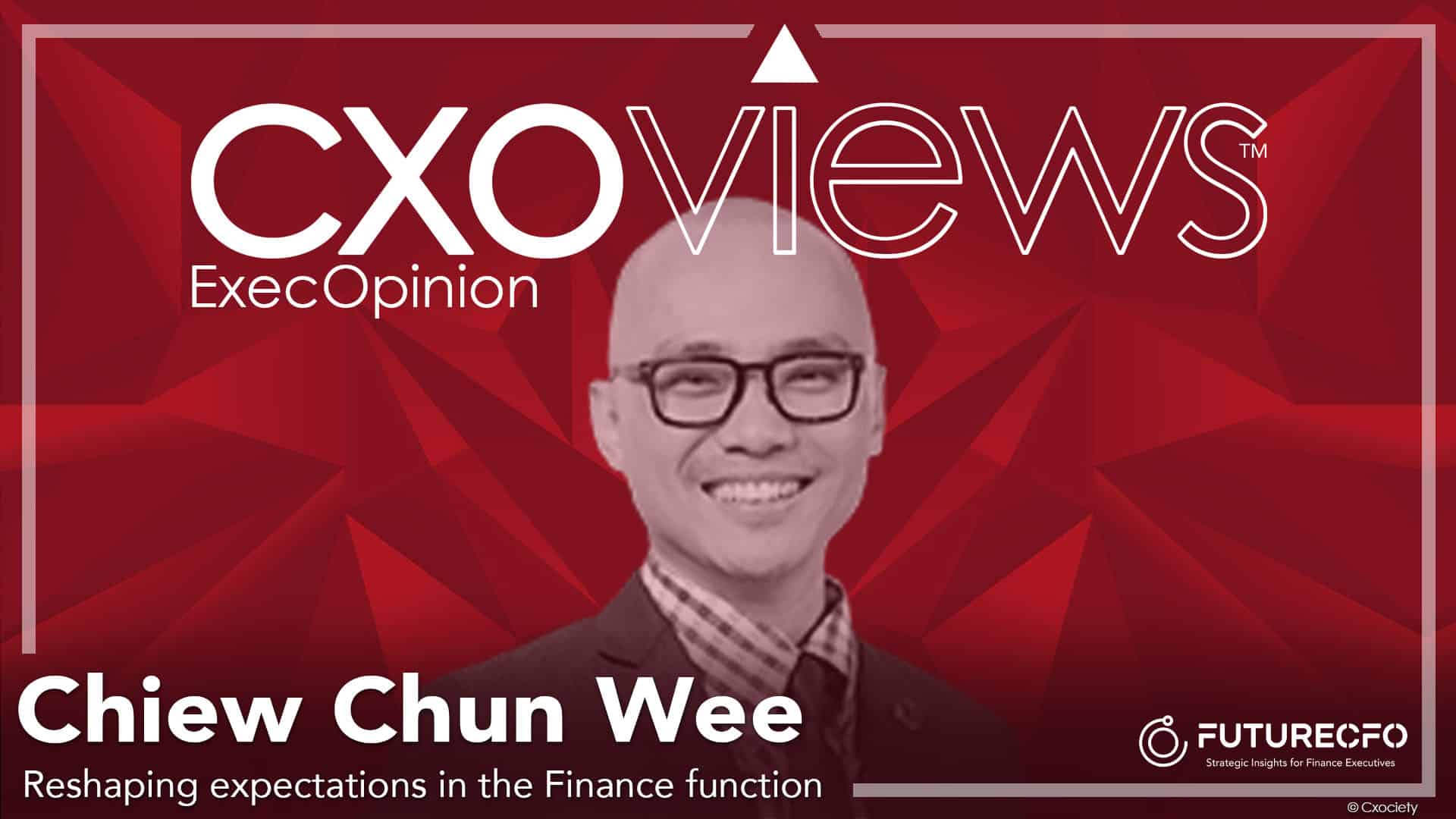
Chiew Chun Wee, regional policy and insights lead for Asia Pacific at ACCA, says this is remolding the expectations in two ways for finance teams and CFOs: in work and in authenticity.
He cites that in Singapore, 70% of finance professionals say an organisation’s reputation on social and human rights issues is a key factor in where they choose to work. More than half want roles that contribute to social impact, and 63% are drawn to roles with an environmental remit.
“Singapore’s profile here is distinctive. While concern for social impact is present, it is the environmental remit that stands out.”
He notes that at 63%, Singapore respondents are drawn to climate-related roles at a rate notably higher than many comparable developed markets. In less developed economies, the link between career purpose and social progress is more visceral – inequality, youth unemployment and women’s advancement are live and visible pressures.
“Singapore has addressed many of those fronts to a considerable extent. What animates finance professionals here is slightly different: a sophisticated awareness of environmental risk, shaped by Singapore’s acute exposure to climate consequences – rising sea levels, regional ecological pressures, supply chain vulnerabilities – and a sense that the private sector, including finance, has a meaningful role to play in the response.”
Chiew believes Finance is increasingly expected to measure, report and help create social and environmental value, not just financial value.
“The CFO sits at the centre of this. Investors and stakeholders are demanding credible, audit-ready information on broader value, and finance is the function equipped to provide it.”
Chiew Chun Wee, regional policy and insights lead for Asia Pacific, ACCA
He says the opportunity is to move from reporting impact to actively helping the organisation create it.
On authenticity, Chiew says, “This is where I will raise a red flag. In Singapore, close to half of survey respondents perceive ESG commitments as a branding exercise rather than genuine conviction, and this is almost 10% above the global average.”
He explains that those affected by this perception report poorer wellbeing and are more inclined to leave their current employers.
“The finance function is the natural antidote to greenwashing: it brings the rigour and assurance that turn claims into robust information. CFOs who lean into that will build both credibility and talent loyalty.”
AI adoption
The ACCA report revealed that eight in ten Singapore finance professionals are confident they can learn and
apply AI skills, yet nearly half still fearing job displacement.
In terms of how finance leaders should balance AI adoption with workforce reassurance and upskilling, Chiew acknowledges that the headline tension here is real, and it is one of the most important findings for finance
leaders to understand.
“In Singapore, 81% of finance professionals are confident in their ability to learn and apply AI. However, confidence in using technology is not the same as confidence in the future.”
Chiew says their Singapore data shows that 61% are concerned about AI’s impact on their own role, higher than the global average of 51%.
“So, we are not dealing with a workforce that is afraid of the technology. Rather, we are dealing with a workforce that is uncertain about what technology means for their careers.”
For him, that distinction should shape the leadership response, noting that the instinct is often to reassure people that “your job is safe.”
Increasingly, however, Chiew says such reassurance may not be seen as credible. “The more honest and effective approach is to acknowledge that roles will evolve, while demonstrating a clear commitment to help people evolve alongside them.”
He adds this is particularly important in Singapore, as 51% of our survey respondents are concerned that their employers are investing more in AI than in people, double the global average.
He believes leaders need to address these concerns directly rather than assume they will dissipate over time, highlighting three things for finance leaders:
First, Chiew recommends for leaders to be transparent about where AI is being deployed and why, because ambiguity breeds anxiety.
Second, he suggests treating upskilling as a long-term strategic commitment, not a one-off training intervention. “Our data shows that where employers provide AI learning opportunities, both confidence and reassurance rise measurably.”
Third, which Chiew notes is the one often overlooked, is redesigning how junior talent develops.
“At this moment, the tasks AI is best suited to perform are precisely the entry-level ones through which the next generation of finance professionals traditionally develops judgement, business understanding, and professional confidence.”
He expounds, “if AI absorbs a significant portion of this work, organisations will need to deliberately create alternative pathways for developing these capabilities, or risk creating a leadership and skills gap in the years ahead.”
He believes that the leaders that get this right will not frame AI as a threat to be managed. They will frame it as an opportunity to unlock productivity, drive innovation, and invest in the growth of their people.
“That is ultimately how confidence in technology can be translated into confidence in the future,” says Chiew.
Recruitment
As only 41% of Singapore respondents trust AI algorithms to make fair and unbiased recruitment decisions, it is important to understand the best practices companies should implement to ensure AI-driven hiring remains transparent and equitable for finance professionals.
Chiew says that 41% figure should give every organisation pause, as it means most finance professionals do not trust AI to hire fairly, and this is not Luddism, it reflects a sophisticated understanding of the technology’s limits.
“The central concern is not that AI is used at all, but that it can embed bias in ways that are difficult to see and harder still to challenge. A human bias can be questioned; an algorithmic one is buried in training data and screening logic.”
So, for Chiew, the safeguards have to be deliberate. Four stand out.
- Transparency with candidates – people should know when and how AI is being used
in a process that affects them; this alone will hopefully address much of the
discomfort. - Regular auditing of AI hiring tools to detect whether certain groups are being
disproportionately screened out and to remove the variables driving that. - Human oversight in the decision loop. AI can screen at scale, but the hiring decision,
especially for judgement-heavy finance roles, must remain human-owned. - And clear governance: explicit internal policies on what these tools can and cannot
do.
He explains one important nuance for senior recruitment: AI is reasonably effective at screening technical criteria at the junior, high-volume end, and the volume pressure is real, with some large employers receiving over 100,000 applications a year.
“But it is much less suited to assessing what matters most in senior finance hires: judgement, integrity, leadership, and cultural fit. Our roundtable participants were clear they would not rely on AI for those decisions, and rightly so.”

The bottom line: AI in hiring is here to stay, but trust must be earned.
He thinks organisations that are transparent and keep human oversight visible will not only hire better, they will signal something important to the very talent they are trying to attract.
Bridging generational gaps
As Singapore workplaces now span five generations simultaneously, and more than half of respondents say organisations are struggling to manage this dynamic, finance leaders must take on the task to bridge generational differences while maintaining productivity and collaboration.
Chiew says Singapore stands out sharply on this measure, with 59% of finance professionals saying their organisation struggles to support effective cross-generational collaboration – well above the global average of 42%.
“I want to draw particular attention to another finding: 37% feel their organisations are not doing enough to recognise the value of senior employees, more than double the global average.”
He says this is unlikely to be about the C-suite or senior managers, who tend to have visibility and influence by virtue of their roles.
“The concern sits one or two levels below that – experienced, mid-career professionals whose expertise and institutional knowledge risk being undervalued as organisations increasingly prioritise digital fluency and AI capability.”
With up to five generations now active in the workforce, these issues are no longer peripheral HR concerns, as they affect productivity, collaboration and workplace satisfaction, and that puts them squarely in the finance leader’s remit.
“The most useful reframe I can offer is this: the friction typically comes from differences in working patterns, communication styles, expectations around feedback, and attitudes to flexibility. That matters because it means the problem is one of organisational design, not personality. And design problems can be solved deliberately.”
Chiew enumerates three practical steps.
- First, take deliberate stock of where institutional knowledge lives in your organisation, and it is often not where the org chart suggests. Mid-level professionals with ten or fifteen years of experience carry judgement, client relationships and contextual understanding that cannot be easily replaced or quickly trained. Making that visible, through structured knowledge-sharing, stretch assignments, or simply explicit recognition, is both a retention play and a risk management one.
- Next, formalise two-way mentoring. The traditional model has senior leaders mentoring juniors. The most effective programmes run in both directions, such as younger professionals can be contributing digital and AI fluency while experienced colleagues share judgement and institutional knowledge. This breaks down hierarchy and builds mutual respect better than any training module.
- Third, build intentionally mixed-age teams around shared goals rather than seniority. Collaboration improves when people are working toward a common outcome, not navigating a pecking order.
He cautions, “resist the temptation to over-rely on generational labels. The more an organisation talks in stereotypes – ‘typical Gen Z’, ‘set-in-their-ways Boomers’ – the more it entrenches the very divisions it is trying to bridge.”
He believes a multi-generational finance team, managed well, is more creative and resilient. The diversity is an asset. The challenge is purely in how it is led.