




CFOs in Hong Kong are facing a new reality, with talent now a strategic risk.
Between 2026 and 2027, cautious hiring contrasts with fierce competition for hybrid skilled professionals who blend accounting expertise, digital literacy, commercial acumen, and regulatory fluency.
Automation and AI threaten traditional career pipelines, while rapid AI adoption, family office growth, and capital markets resurgence intensify demand, driving attrition and salary inflation.
CFOs are expected to act as talent architects, restructuring teams and embedding AI governance, and building resilient succession plans to safeguard leadership continuity against competitive pressures and workforce disruption.
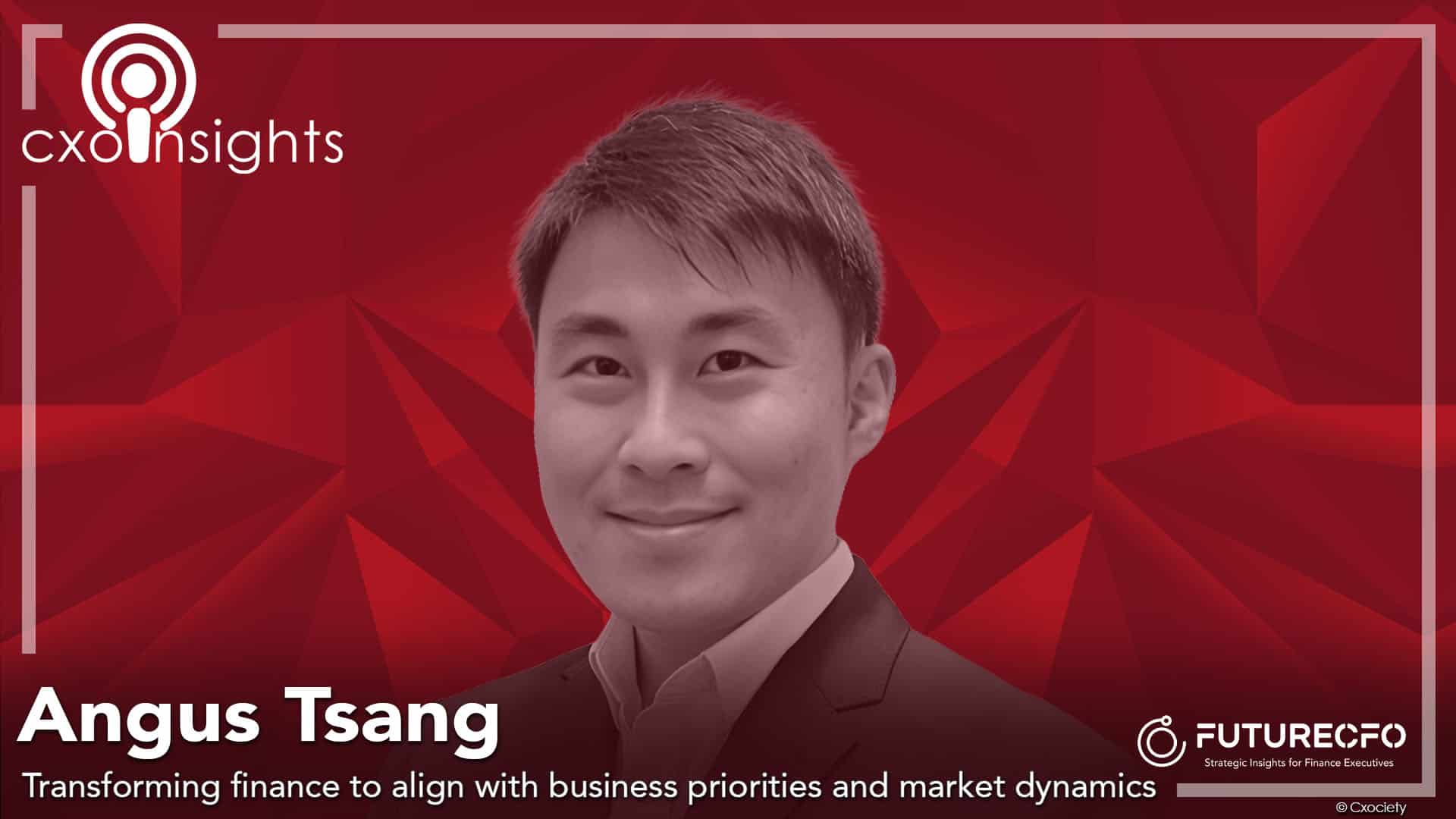
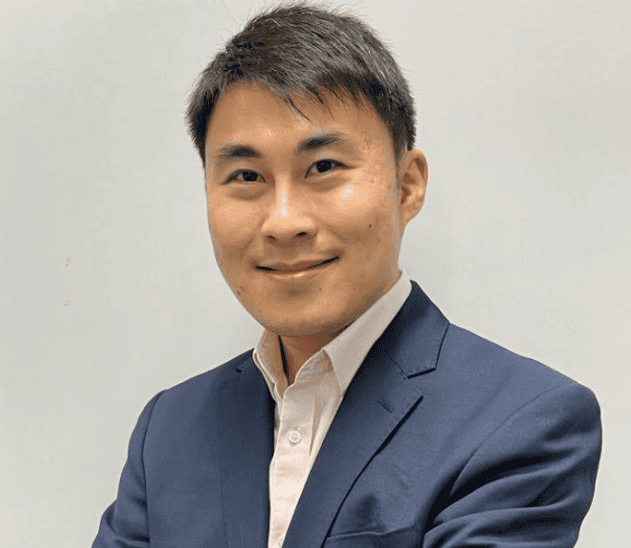
Angus Tsang, CFO and Company Secretary for CN Logistics International Holdings Ltd., shares his thoughts on how finance leaders are adapting the workforce strategy to align with business priorities and market dynamics.
Redefining the finance operating model
To balance cost efficiency with the more strategic agility required to support business growth in 2026 and beyond, CFOs are practically tasked to redefine the finance operating model.
Tsang believes that in the past, finance personnel are more on the operations side, which means preparing all the journal entries and the books and records.
“And then that’s it. You can go by 6 p.m., that’s it.”
However, he opines that for now, the role is a little bit different.
“It leans towards something we call business partnering, which means other than producing the record, you have to do more analysis and then you have to help your boss to, say, give him some advice so that we can help him to make some business decision.”
In terms of CFOs and the changes they face, Tsang notes on the role of outsourcing.
“We still have to work on that. That’s why this is still part of our core operation or our core business.”
He thinks they should outsource that part to AI or some analytical tools to put more time in the core business to show value.
“When we do automation, then we can reduce our costs in the preparation part, and then we can put more effort into hiring personnel specialised for FP&A, financial planning and analysis.”
He highlights the need to lower the cost on some groundwork to increase cost in more analytical situations.
An inventory of skills
When it comes to talent nowadays, CFOs are expected to have a clear inventory of the skills they need as opposed to the skills that they already possess.
Tsang believes the skill sets should be categorised into two parts.
He explains, “One part is more traditional and another part is more contemporary.”
As for the traditional part, he says this usually refer to the technical part of financial skill set, as in financial reporting, management reporting, analysis, and budgeting.
“I do not think there’s any problem on that”, Tsang says. “The more problematic part I think would be on the contemporary part.”
He refers to the contemporary side as that of how to make use of the technology.
“I think for especially the seasoned CFO or some staff that is having more experience or having already a very long career life, 20 years or even 30 years, they struggle on using the new technology.”
He observes that these people are still highly reliant on traditional means, as they will at most use Excel and then prepare a lot of spreadsheets and then they like to just analyse manually without using all those tools.
“I think what we have to do is to build up the skill set on the contemporary one.”
He says he strategises on hiring new generations, noting that during interviews, he asks what tools they are using for analysis and for reports building.
Talent acquisition
As CFOs are faced with the task of adapting their talent acquisition strategy to compete for versatile talent in a market where specialists command significant salary premiums, Tsang believes there is a need to cultivate technological skill.
“Nowadays, I think we are more on hiring other than the specialised skill ones. We are also hiring someone with generalised skill.”
He adds that when hiring this kind of talent, one would have to “give some premium” in terms of what they know, as what they know is not only on one area, but on multiple areas.
“We have to give enough money, but money is not enough. Because nowadays, new generations, at least in Hong Kong, they don’t care too much about money…They need more on work-life balance…more on fulfillment, on satisfaction.”
Moreover, Tsang highlights the importance of making way for work-from-home set-up.
“Although it is a bit difficult for our industry, the nature of logistics is with a lot of documentation, which needs to be completed at the company. But I try my best to give them some flexibility, like when they have to take care of their family, they have to take care of say kids, I’ll let them work from home.”
He explains that the key principle is make them as happy as possible, but not just by monetary terms.
“We have to make them happy also by giving them something spiritual or psychological.”
The automation paradox
When it comes to the CFO’s strategies to manage the automation paradox, which states that the more efficient and reliable an automated system becomes, the more crucial the human operator is when things go wrong, Tsang concedes that it is a true fact that the conflict between the lower-ranking staff and the new technology exists.
there’s conflict. Like the new technology is just stealing their ball.
He believes the staff, first of all, have to understand the reality and the task at hand: they are not the preparer anymore.
“What they have to do is they have to transform themselves from doers to assurers,” Tsang says. “Their skill sets are not like [for] a first day when they come to the office and then I’ll tell them, just go for the board of directors and then give them the suggestion about 1 billion investment. No, it’s not like that.”
He explains that staff have to train themselves in dealing with AI and other technological advancements. In addition, they should be able to identify how to review the output from the software.
“They have to apply their judgment on when to accept the replies from AI and also whether the AI is objective enough.”
He adds that staff must see and know the applicable situations they can use particular tools in order to get the optimum reply or the most correct answer.
Succession planning
As for succession planning, Tsang believes it must be proactive.
He explains that ideally, there have to always be at least three reserve members to replace whoever that might be resigning or retiring or leaving the company.
To keep these three reserves, he says his method would be to use the rotation plan.
“All staff member within the finance team, they’ll have chance to take different roles.”
He says this will involve them having a deep knowledge of everyone’s tasks so that if anything happens to a particular role, they can put up someone in the same team as a successor to replace the one who is going to retire.
But in the worst scenario, I still have someone from other team, like senior manager from the FP&A team to take over the director role of the financial reporting team so that there would not be any vacancy because of accidents. And so that this could keep the continuity of the team.
He believes the rotation plan allows the team to learn more new things, while preparing the new generations and boosting their morale.
Measuring ROI for talent development
Tsang concedes there is no official measurement for ROI for talent development programs, but notes that they can do some comparison before and after launching the initiative.
“We can take a look at some metrics, like how long it takes for a junior staff to become a certain level, like managers, or the turnover rate before and after launching the program.”
He adds that they can also take a look at the efficiency of recruitment, as this gives them a glimpse on the company’s reputation.
“If we are easier to hire people, then that means our company’s reputation has been better.”