





The evolving role of the chief financial officer is undeniably demanding more than financial expertise and business partnership.
As organisations navigate economic uncertainty, technological disruption, and shifting market conditions, finance leaders must move beyond interpreting historical performance to anticipating future risks and opportunities.
For accountants aspiring to land the CFO role, this shift requires a forward-looking mindset that connects financial insights with strategic foresight and long-term business resilience.
The Rise2040 initiative of AICPA & CIMA highlights this transition from “historian to futurist”, underscoring the need for finance professionals to become anticipatory advisers who help shape business decisions before challenges emerge.
Rather than simply reporting what has happened, future CFOs must be able to interpret emerging trends, challenge conventional assumptions and translate data into actionable strategies.
This evolution raises the critical question: what mindset shift will enable aspiring CFOs to move beyond being business partners and become strategic leaders who help organisations prepare for what lies ahead?
Focusing on the future
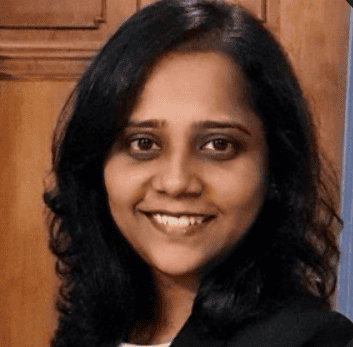
Saritha Subramaniam, director of Southeast Asia & Australasia at AICPA & CIMA, believes the most important shift for an accountant aspiring the CFO role is to understand that rather than focusing on explaining what has happened, the expectation is to be able to focus on the future, to guide decision making, anticipate what might be needed or manage situations.
“Our Rise2040 initiative, a global profession wide insights programme involving over 6000 individuals from CPA and CGMA backgrounds, delivered a consensus that accountants are on trajectory to evolve from ‘compliance historians’ to ‘strategic futurists.'”
She explains that this encompasses the fact that the future CFO cannot only be strong on accuracy, control, and decision support.
“Those things still matter, of course, but the role now demands a more forward-looking posture: noticing what is changing, testing different scenarios, and helping the business act before it is forced to react.”
She describes the shift, “a business partner helps support decisions once the question has been asked; an anticipatory advisor helps frame the question earlier, clarify the options, and prepare the organisation before the need becomes obvious.”
In practical terms, Subramaniam says that means becoming more comfortable with forecasting, scenario planning, and using data and AI to strengthen judgment rather than replace it.
Further, she notes this translates to treating uncertainty as something we actively prepare for, and bringing a human-led approach to trust, governance, and strategy.
The balancing act
In an era of “ambient AI” and embedded AI assistants in ERP systems, accountants are expected to balance the need for deep technical AI proficiency with the development of human-centric skills like strategic judgment and ethical oversight.
Subramaniam believes that the balance starts with recognising that this is not a choice between becoming highly technical or remaining focused on human judgement.
“For me, the right answer is technical fluency supported by strong professional judgement and trust.”
She says as AI becomes embedded in ERP, finance, tax, and audit systems, accountants do need a solid understanding of how these tools work.
“We need to know what the system is doing, what data it is drawing on, where it is reliable, and where human review is still essential.”
However, she notes that she does not describe the goal as becoming technologists, as the enduring value of the
profession is trust.
“That comes from ethics, integrity, strategic judgement, and the ability to explain decisions clearly to leaders and stakeholders. Those are the capabilities AI can support, but not replace.”
So, in practical terms, Subramaniam thinks accountants must learn the technical basics of the profession deeply enough to question the tools, understand their limitations, and govern their use responsibly.
“At the same time, we should invest even more in the human skills that make our judgement valuable: asking better questions, interpreting risk, applying ethical oversight, and helping organisations make sound decisions.”
In summation, Subramaniam says they need to understand AI well enough to lead it, challenge it, and keep it within the boundaries people define.
“AI may do more of the execution, but people must remain accountable for the decisions it supports. That means being the human in the lead. It is our role to be trusted professionals.”
The competency gaps
With hiring executives nowadays valuing forward-looking financial acumen and critical thinking over traditional compliance skills, Subramaniam believes the important point is that CEOs are not asking accountants and finance professionals to abandon their technical grounding.
“That remains essential,” she opines. “What they increasingly want is for finance professionals to use that grounding to help shape the next decision, not simply protect or explain the numbers after the fact.”
She says this is the difference between delivering trusted information or creating value.
“From what we see through Rise2040, this is really a capability redesign for the profession, rather than a rejection of the skills that have always mattered. The future demand is for professionals who combine technical excellence with judgement, influence, commercial understanding and business leadership.”
For her, the competency gaps are not usually in core accounting knowledge, but are more often in the skills that turn strong technical work into enterprise value: strategic thinking, the ability to anticipate what is coming, confidence in partnering with colleagues across operations and sales, and the ability to turn data into a clear, decision-ready story.
“Critical thinking is also becoming even more important because AI can produce analysis very quickly, but professionals still need to challenge the assumptions, test the outputs, and understand whether the recommendation makes sense in the real business context.”
Practically, she thinks those capabilities are built through repeated exposure to higher-value work, not through one-off training alone.
“That means spending time with operating leaders outside finance, understanding how value is actually created, building forecasts around multiple scenarios rather than single-point answers, and turning dashboards into recommendations: one insight, one implication, and one action.”
She also encourages accountants and finance professionals to get to know their business, their sector and seek stretch roles in areas like planning, transformation, pricing or strategy, where the answer is not already known.
Additionally, she recommends considering programmes, even as a seasoned CPA, like the CGMA Qualification which focus primarily on strategy, management and operations as this is where one develops the ability to influence, to communicate trade-offs, and to help the organisation move from analysis to action.
“In the end, this will translate into creating value for others and provide the strategic leadership capability CEOs are looking for.”
Trust architects
The Rise2040 report highlights “trust” as the accountancy profession’s enduring core, but notes it is “increasing in value” as a differentiator in an AI-saturated world.
As a “trust architect,” Subramaniam notes on how this is associated very strongly with the balance sheet, the audit opinion, or the annual report.
However, in an AI-saturated world, she says that trust has to extend much further—into the data, the systems, the workflows, and the decisions that AI is helping to shape.
She explains the idea of CPAs and CGMAs as a “trust architect” means making sure that AI-driven information is not just delivered fast, but is reliable, transparent, governed, and fit for the decision being made.
“It has passed through the lens of a professional who has applied their critical thinking skills and used judgement, not merely supplied a report or data.”
She adds that accountants and finance professionals have a role in designing and testing the controls around AI: the quality of the data, who has access to it, how outputs are reviewed, when issues are escalated, and where human judgement needs to override automation.
Further, this means being an independent-minded validator. Subramaniam stresses, “we should be asking whether the system is producing outputs that are accurate, explainable, and appropriate for the business question in front of us. And increasingly, that assurance mindset will apply beyond traditional financial statements into areas like data assurance, ESG assurance, AI output verification, and digital transaction authentication.”
The reason this matters so much, according to Subramaniam, is that trust is becoming more valuable, not less.
“AI can generate very persuasive answers that are still wrong. It can accelerate misinformation and make it harder for leaders to know what they should rely on. So the professional accountant and finance professional’s role is no longer simply to check the numbers. It is to help certify the conditions under which the numbers, the insights, and the recommendations can be trusted.”
Redefining roles
With CFOs facing pressure to prove ROI on AI investments and a focus on delivering “auditable impact” from technology, CPAs are faced with the task to redefine their role to contribute to measurable outcomes like faster closing, improved forecast accuracy, and stronger working capital management.
Subramaniam concedes AI is changing the role of finance and accounting professionals from simply producing or reviewing numbers to validating how those numbers are generated and whether they can be trusted.
“As organisations implement increasingly sophisticated ERP systems, automation tools, and AI-enabled reporting platforms, the question is no longer just whether the numbers are correct, but whether the systems, data, assumptions, and controls behind those numbers are reliable.”
She explains that this is where accountants and finance professionals can add significant value, as their role is
evolving beyond financial stewardship to becoming trusted business advisors who understand the flow of data, challenge assumptions, assess governance, and determine whether AI-generated insights can support sound decision-making.
“When CFOs talk about ROI from AI, they are not looking for proof that a system was implemented on time or within budget. They want evidence of tangible outcomes: faster close cycles, improved forecast accuracy, stronger working capital management, better productivity, and higher-quality decisions.”
Ultimately, Subramaniam believes accountants must bridge technology and business value, helping organisations move beyond measuring adoption to measuring impact, ensuring that AI-generated insights are transparent, explainable, and trusted.