




While organisations invest in enterprise performance management systems and AI pilots, the fundamentals remain broken. Data is unreliable, communication remains ineffective, and spreadsheets still dominate planning workflows. And despite vendor promises, fewer than one in four FP&A professionals actively use AI.
Industry research figures go further. According to the 2025 AFP benchmarking surveys, 96% of treasury leaders globally recognise communication as critical to their role. Yet only 81% are perceived as effective communicators. This 15-point gap directly undermines career progression and strategic influence. Meanwhile, cash and liquidity forecasting remain the top challenge for over 60% of treasury teams.
AI adoption sits at just 23% amongst active users, though 40% are piloting implementations. More revealing is that even amongst “strategic/optimised” treasury teams, automation remains partial at best.
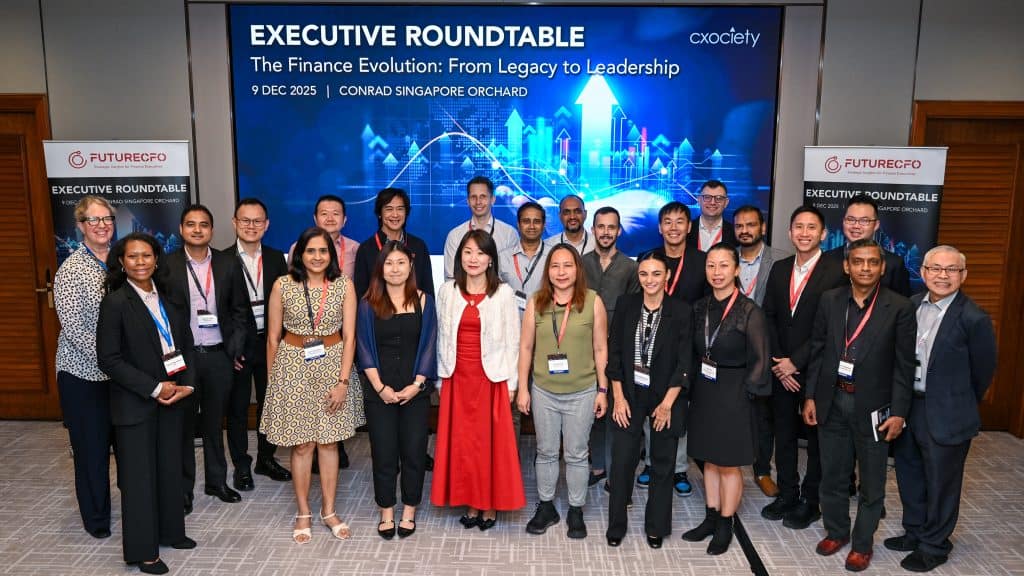
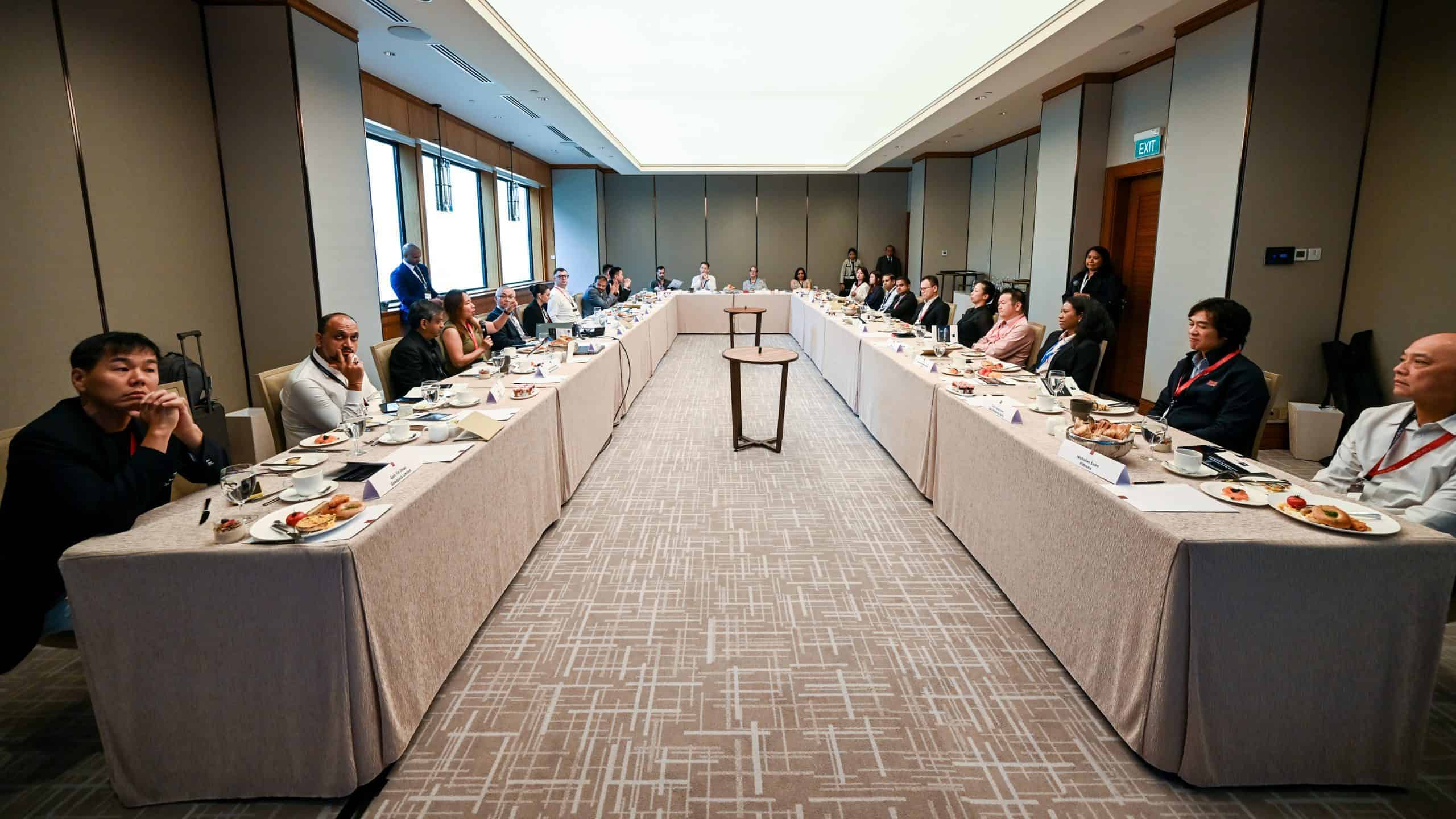
At a December 2025 roundtable in Singapore, executives from shipping, pharmaceuticals, mining, insurance and aerospace went deeper into the challenge. When Francine Hope-Pressley, chief financial officer of the Association for Financial Professionals (AFP), presented this data, few were surprised by the challenges.
What followed, however, was a 90-minute discussion that laid bare an uncomfortable truth: the barriers to strategic finance leadership are as much cultural and cognitive as they are technical.
The question is whether organisations can close these gaps before they lose their best talent.
The strategic shift: Thinking like owners
“The big piece is to understand the business,” said one delegate to the roundtable. “Understanding from operations to sales helps you create value, because then you understand what the organisation needs.” During his career, he moved from FP&A to treasury, a lateral shift that proved instructive. Most finance professionals, he observed, aren’t trained to think beyond their technical domain.

Teck Liong Liew, CFO at AAL Shipping, noted, “We need people who break that boundary — who are not just accountants or treasurers, but businesspeople.” Translation: The challenge is structural. Finance roles continue to be process-oriented, focused on getting from point A to point B rather than understanding why the journey matters.

Goh Yin Shian, group finance director at Goodpack Pte Ltd, described the role evolution: “The CFO was the all-knowing one. Now, managers have picked up those skills, while the CFO focuses on longer-term processes. You can’t have the same person from 10 years ago doing the same thing today.”
When Goh challenged his treasury staff during appraisals, his message was to stop thinking about what their profession wants to hear. “Think of what an owner wants to hear. Any shareholder asks: how do tariffs affect you? How does Ukraine affect you?”

Ines Kherbouche, finance transformation controller at Airbus Singapore, framed it as dual competency: business partnering plus financial trajectory. “If you add those together, this is where it becomes strategic.”
The communication crisis

If business acumen is the foundation, communication is the lever. Based on the discussion, this lever is broken. Philip Tan, group CFO at Boroo Pte Ltd, has a rule: no more than seven slides, including the company pitch.
“If you cannot get a message across in 20 minutes, people lose attention,” he said, invoking TikTok’s three-second economy. “If you can’t communicate it in that initial punch, people will say it’s too difficult and move on.”

Nicholas Soon, global director of treasury at Filtrona, emphasised reading the room: “Body language matters. They may not tell you upfront, but they whisper amongst themselves.”

For Navin Kanagasabay, finance director at Hummingbird Bioscience, it’s about accessibility: “How do you make finance digestible for non-finance people? Being an ambassador for the function helps build rapport.”
Yet AFP’s data suggests this remains aspirational. The 15-point gap between recognising communication’s importance and demonstrating it reveals a profession struggling to translate technical expertise into influence.
Technology’s reality gap
AI is supposed to close such gaps. The 2025 AFP survey found this closure remains aspirational: 96% of FP&A practitioners still rely on spreadsheets, while only 23% actively use AI. The roundtable validated this hesitancy.

Jonathan Seow, CFO at Moleac, recounted a challenging AI push. There was a top-down budget allocation for tools in early 2025, but there was little buy-in. “As we reflect now, teams weren’t ready,” he said. “The softer aspect of adopting technology is probably more important than the actual technology.”
Boroo’s Tan emphasised discipline: “Business users who drive the need for AI should drive the requirements. It must not be an IT activity.” But this demands clarity that organisations often lack.
AFP’s Hope-Pressley identified the root cause: “If it’s top-down, there’s a lack of understanding as to the why. But another challenge is readiness: Is your data ready? Are your processes ready? If not, even the best AI plans will fail.”
One delegate added, “For a mid-maturity organisation, it’s very important to be data-worthy. If they can work on data worthiness, they can scale very fast.”

Steffen Schick, global director for planning & forecasting / FP&A at GSK, positioned AI chatbots as “table stakes” and warned against passive reliance on employer training only. “I spend minimum five hours a week learning, exploring & building with AI. A few hours of employer led training isn’t enough.”

Yet implementation struggles persist. Vibhash Joshi, director for treasury and head of cash & banking in APAC at GE Vernova, thinks that the usage of AI in the Treasury world still needs to be picked up. Banks share their AI tools, but live examples of implementation are few.
One treasury professional delegate at the roundtable noted
Treasury’s consolidation imperative
Whilst FP&A grapples with storytelling, treasury faces its own maturity curve. GE Vernova’s Joshi described the paradigm shift: “More than ten years ago, we went to legal advisers for regulatory questions. Five years ago, that shifted to banks. Now, treasurers are expected to be as updated as the banks themselves.”
His advice to growing Treasuries was to consolidate banking relationships early. “Concentrate everything into one or few banks rather than thinking short-term.”

Yet Joris Mathias Chevaux, Asia Pacific treasurer for a global consumer goods group with premium positioning, cautioned about AI’s readiness for treasury.
“We use it for small tasks, like drafting RFPs and letters. But the key issue is data integrity. How do you question information from AI [like whether] is this a real correlation or something AI created because you asked?”
The talent paradox
The roundtable’s most provocative moment came when Chevaux challenged the framing on the lack of new talent: “Why do we limit this to high potentials and young people? Organisations also have key talents who aren’t young and have different aspirations.”

Bryan Tong, CFO at Allianz, described his personal philosophy when it comes to people development: “Every year I ask every staff member, even fresh graduates, what do you want to do? Where do you see yourself? I’m not just developing you for my company. I’m developing you beyond it. Some want to start a bakery business. Fine, let’s look at entrepreneurship skills.”
One delegate advocated releasing talent deliberately: “Send them out into the world. At a global company, if you stay only in Singapore, you’ll have limited opportunities. Let them see other countries; they’ll want to come back.”
Chevaux summarised the compact: “Development isn’t just training; it’s opportunities. Companies aren’t paying for training anymore. It’s about horizontal moves, freedom to grow. If we do two years in the same role now, that’s already a lot.”
The entrepreneurial mindset
As the session closed, AFP’s Hope-Pressley returned to the core issue of the afternoon — the shift from technical expertise to strategic entrepreneur. “The critical difference I observe, whether in a small company or a Fortune 500, is an entrepreneurial mindset, ” she noted, questioning how current leaders can model this for their teams.
She highlighted specific demographic gap: “Newer hires have that mindset already. The challenge is middle management — 10 years in — switching to that way of thinking.”

Melissa Rawak, AFP’s managing director, global product strategy and growth, reinforced the organisation’s bridging role in driving this mindset:
“We’re a professional society, nonprofit and unbiased. What’s important is connecting you through certifications, training and virtual communities.”
The human imperative
As organisations accelerate digital transformation, the roundtable’s consensus defied conventional wisdom: technical proficiency is necessary but insufficient. One delegate to the roundtable captured it succinctly: “Think about what the owner wants to hear. But also, if you were the owner, would you do this?”
This leads to a paradox: while 83% of FP&A leaders globally now value technology skills as highly as core finance competencies, the humans who will thrive are those who remain most human — curious, communicative, courageous enough to think beyond their silos.
The finance profession’s evolution is less about mastering AI than mastering influence, less about automation than articulation, less about data than deciding what stories data should tell. For Singapore’s finance leaders, that evolution isn’t in the future anymore.