




As organisations in Malaysia navigate an increasingly volatile economic landscape, finance, FP&A, and treasury professionals face growing pressure to deliver strategic insight rather than merely accurate numbers.
Globally, the AFP Treasury Benchmarking Survey reveals a disconnect: while 96% of treasury leaders recognise communication as critical, only 81% are perceived as effective communicators. This gap undermines influence and career progression. Meanwhile, cash and liquidity forecasting remain top priorities and pain points, with over 60% of global survey respondents citing them as their greatest challenge.
Crucially, 83% of FP&A leaders globally now value technology and data skills as highly as core finance competencies, reshaping what “career-ready” looks like. In Malaysia, talent retention depends on offering clear pathways for leadership development, exposure to emerging technologies, and opportunities to transition from transactional roles to strategic advisory positions.
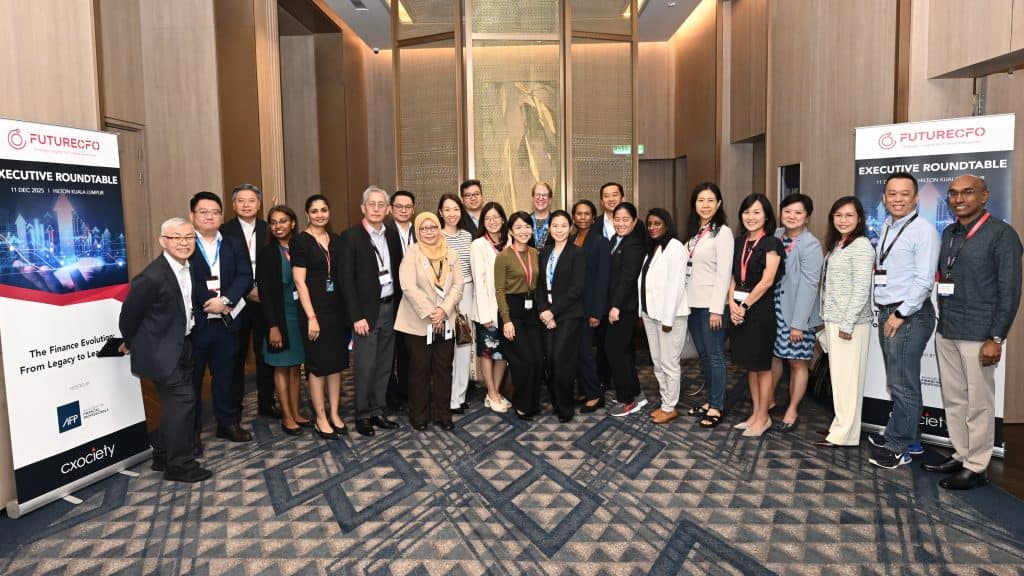
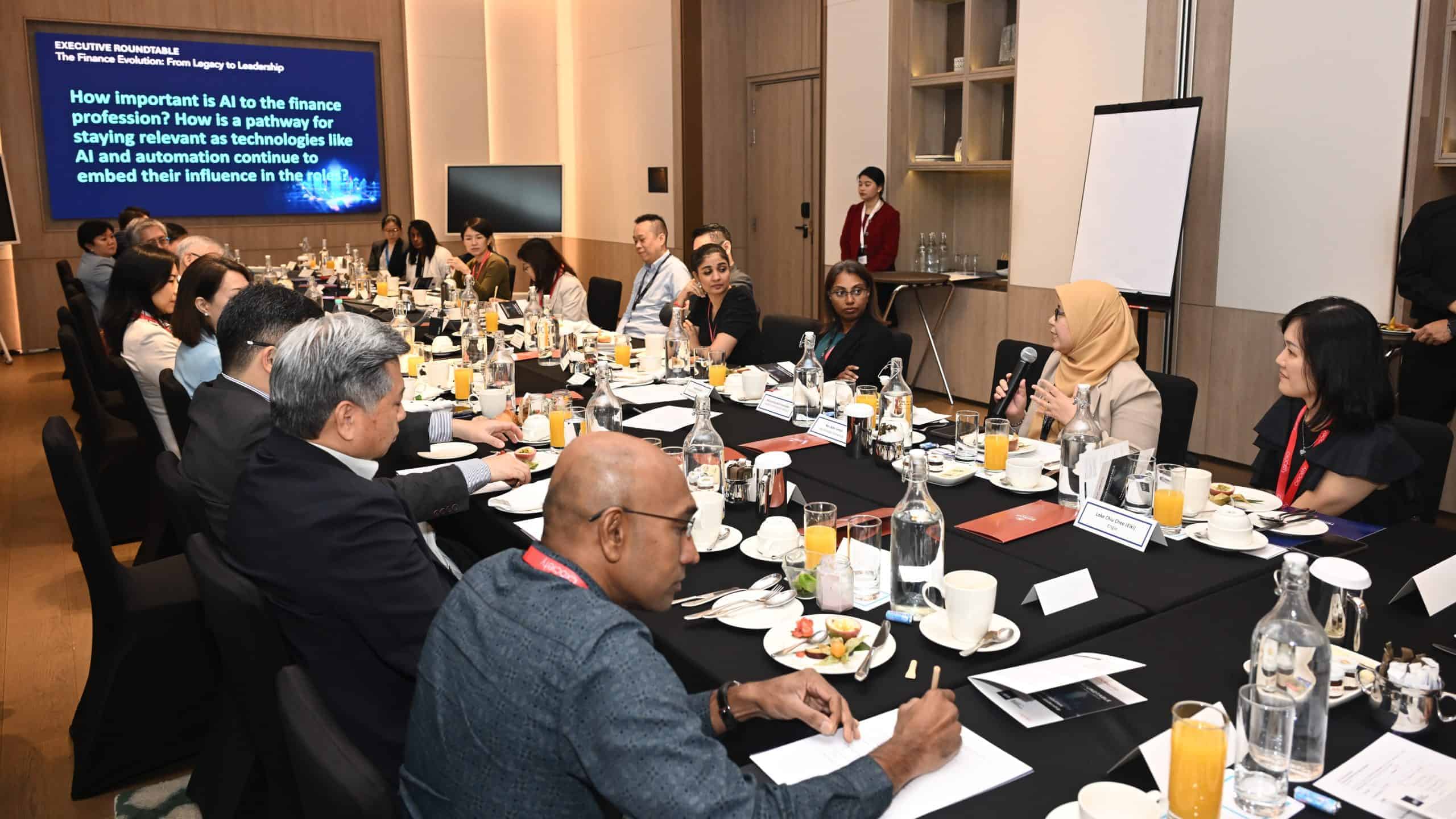
At a December 2025 FutureCFO roundtable in Kuala Lumpur, senior finance leaders from Malaysia’s pharmaceutical, manufacturing, banking, healthcare, and FMCG sectors confronted these challenges head-on. Their unanimous message was clear: technical mastery of management accounting and financial reporting alone no longer suffices for CFO-track professionals.

“In the past, we were just churning results,” noted Chiu Yoong Ng, Asia controller at Kimberly-Clark. “That has changed rapidly. We need to talk value, not just numbers.”
Translating management information into decisions
A recurring theme at the roundtable was that a finance function’s credibility depends on its ability to contextualise management information for non-financial stakeholders. “Understanding the numbers and translating them into something decision-makers are interested in is critical,” emphasised Ng.

This imperative extends beyond FP&A. Alice Foo, head of Tax at Fraser & Neave Holdings, highlighted her function’s shift from compliance to strategic counsel: “The conversation now is: how can I get tax savings while ensuring strategic alignment? We need to manage both worlds.”

Traditionally siloed treasury functions are also being drawn into broader business dialogues. However, Vinsee Woo, head of FP&A and financial controls at Essentra, questioned whether treasury professionals receive comparable visibility on succession pathways: “In my experience, FP&A is always seen as a strategic partner. But how can treasury professionals demonstrate their route to C-suite leadership roles?”

Nor Adni Ismail, CFO at Multimedia University, emphasised that treasury plays a strategic role in safeguarding working capital and strengthening balance-sheet value, beyond the traditional focus on profit and loss.
“Treasury is not just a back-office function. It is a key driver of liquidity, risk management, and financial resilience — areas we often underappreciate when we look only at P&L performance.”

Communication barriers persist across Malaysia’s finance functions. Ang Kok Ching, group CFO at Qualitas Health, argued that adding strategic value with perspective thinking which transcends boundaries: “It’s important to think from multifaceted and having perspective of different stakeholders which allow open mindedness in collaboration to address the issues on hand.”

Francine Hope-Pressley, the AFP or Association for Financial Professionals’ chief financial officer, echoed this sentiment: “We’re seeing more engineering and science backgrounds in finance leadership due to how they think and analyse. It’s about assembling information from all angles and telling a story tailored to your audience.”
Redefining the CFO competency model

The debate over “hard” versus “soft” skills unveiled deep generational and organisational divisions within Malaysia’s finance talent pipeline. Joash Neo, head of finance & business strategy at Prince Court Medical Centre, foresaw that robotic process automation will make many traditional financial accounting tasks obsolete: “Most clerical work can be better executed with the help of robotic and automation. Human can add significant value of how by coping under pressure.”
One delegate cautioned against neglecting technical foundations in the rush to develop business acumen: “Soft skills and communication are weak in Malaysia compared to peers in Thailand or Indonesia.”

Ryan Gan, APAC finance service delivery director from a leading global company in the prestige beauty industry, reframed the terminology: “Soft skills should be labelled as human skills.” He advocated investing more in human capabilities: “According to the World Economic Forum, the key differentiator by 2030 will be these human skills. Finance must speak the business’s language to drive outcomes.”

Chenghan Chee, director of finance at GEODIS Malaysia, highlighted the need for a mindset transformation: “In the past, accountants focused solely on compliance. Now, with AI and shifting economics, that mindset must change. We must adapt how we manage different staff cohorts.”

Phamani Rankersamy, concurrent head of balance sheet management, regulatory reporting & budgeting as well as head of data management at Bank Simpanan Nasional, stressed the generational concern: “The below-30 cohort uses AI extensively, but they lack deep technical ability in financial modelling. Without sound technical knowledge, AI output will be basic.”
Talent management strategies
When discussing talent management, participants challenged conventional wisdom about identifying and nurturing “high-potential” (HiPo) finance professionals. A delegate observed a generational shift: “The younger generation is transparent about compensation and career progression timelines. We must adapt our rewards to market realities or risk losing talent to MNCs.”

Retention strategies, however, extend beyond remuneration: “You either make them earn it or learn it,” argued Yee Wen Ong, CFO at Hoe Pharma Holdings. “If lucrative compensation isn’t feasible, ensure they’re developing competencies in areas like financial planning or business intelligence.”

Kenny Saw, director of finance and planning at Philip Morris Malaysia and Singapore, outlined a three-pronged talent value proposition: “First, give talents a strong sense of purpose beyond profit maximisation. Second, maintain a robust career development and succession planning framework. Third, prioritize employee experience over tenure; noting that former employees are also valuable brand ambassadors for the company.”
Ang challenged the HiPo construct itself: “I think ‘high-potential’ is political—different leaders lobby for their favourites. If only a few analysts get labelled HiPo and rewarded, what happens to the others? You demotivate the majority.” He advocated for distributing development opportunities more fairly across finance teams.
Scaling digital transformation
Operationalising strategic finance at scale across Malaysia’s diverse corporate landscape remains fraught with challenges. Ong warned against blind digitisation: “Many leaders replicate entire manual processes into systems. Simplify first using lean principles, then digitise. Otherwise, you waste effort.”

Sheree Lim, head of treasury business transformation at Technip Energies, advocated for incremental efficiency gains: “Think operational improvements that save five minutes per finance professional each day. Those marginal gains compound into real productivity.”

Jeevajothy Murugiah, head of controlling and financial planning at Eppendorf, stressed the importance of transparent change management communications: “Top management often makes system investment decisions without sufficient stakeholder consultation. Clear engagement to understand the needs of and impact to different stakeholders builds a culture of adoption rather than resistance.”
One delegate distilled career progression into a single maxim: “Be a positive busy body in understanding the entire value chain. Don’t be political in stakeholder management.”
AI in finance: Tool or hype?
The roundtable concluded with questions about AI’s role in the future of FP&A, treasury, and controllership functions. GEODIS Malaysia’s Chee encouraged his finance team to use AI tools like ChatGPT, especially for drafting commentaries. However, he emphasised the importance of understanding MFRS accounting standards first.
Prince Court Medical Centre’s Neo envisioned a broader application of AI in healthcare finance: “We’re modelling AI to help to manage patients flows and enhance forecasting models, not just analyse past budgets.”

Ruben Baskaran, CFO at Weststar Aviation Services, offered a historical perspective on technology adoption cycles: “AI is just the latest tool in a longer progression. The human element of judgement remains essential for interpreting generated data.”

Hazel Jerusha, head of finance and accounting for APAC at Electrolux Professional Malaysia, voiced concerns about over-dependence on AI: “I worry that relying on AI might diminish critical thinking in finance graduates. Our challenge is to be better mentors.”
On AI adoption, Ismail highlighted that its true value lies not only in efficiency, but also in strengthening organisational culture.
“AI can automate routine work and free up time, but its greater impact should be in enabling better collaboration across functions and improving employee retention — not creating distance between people”
Reimagining Malaysia’s finance profession

Melissa Rawak, AFP’s managing director of global product strategy and growth, noted the collaborative energy in the room: “This has been such a dynamic conversation amongst Malaysia’s finance leaders. What struck me most was how you’re helping each other across industries — from pharmaceuticals to aviation to banking — proving our hypothesis that this professional community desperately needs these peer dialogue platforms.
“This spirit of collaboration is at the heart of AFP’s mission. We strive to be the bridge connecting finance professionals with global insights as they navigate this shift from scorekeeper to storyteller. We want to empower Malaysia’s finance and treasury professionals to collectively redefine the value they bring to the C-suite,” she concluded.
The Kuala Lumpur roundtable underscored a fundamental shift in Malaysia’s finance leadership paradigm. CFO-track competency is no longer about mastering debits and credits or technical accounting standards, but about mastering stakeholder influence, commercial adaptation, and strategic foresight.
In an era where 83% of FP&A leaders globally prioritise technology and data analytics skills as much as core finance competencies, as highlighted in the AFP survey, Malaysia’s finance professionals must simultaneously upskill technically in financial systems, sharpen their strategic communication and business partnering capabilities, and cultivate the human skills that enterprise performance management systems cannot replicate.
Organisations across Malaysia need to invest deliberately in finance talent development pathways that expose high-potentials to cross-functional business challenges, emerging financial technologies, and CFO succession opportunities. Else, they risk haemorrhaging capability to regional competitors in Singapore, Thailand, or global shared services centres.
As Kimberly-Clark’s Ng urged during the discussion, finance professionals should “always ask the right questions and stay curious”. That’s because, in 2025 and beyond, the finance function’s value proposition to the C-suite lies not in what it reports but in the strategic insights it reveals.