




Editor’s note: Explore and transform. Give yourself permission to take time for yourself, says Sophia Pang, enterprise performance management SME at IBM.
In today’s Female Leadership interview, Pang shares her advice for aspiring female finance professionals, how she enjoys keeping fit, and how important it is to not be afraid to transform one’s self along the way.
FutureCFO: What does a typical day look like for you?
Sophia Pang (SP): My work sometimes requires me to travel for business, particularly across the ASEAN region, so my routine can vary depending on whether I am travelling or working from home.
On days when I am not travelling for business, I mostly work from home. A typical day starts around 7am. After freshening up, I usually take a short morning walk to the nearby petrol kiosk to buy the morning papers.
I still enjoy reading a physical newspaper and flipping through the pages over breakfast — it is a small habit I have kept despite living in such a digital world.
I usually start work around 9am and work until around 6pm. Much of my day involves online meetings with clients and colleagues across ASEAN countries, responding to emails and, as a subject matter expert, keeping myself up to date with the latest developments in technology and finance.
I also try to spend time experimenting hands-on with new technologies and features.
For me, it is important not just to understand what a technology can do, but to explore how it can create value for finance teams and organisations.
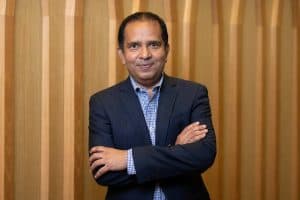
Sophia Pang, enterprise performance management SME, IBM
Once or twice during the week, I also make time in the evening to keep fit by going to the gym. It is a good way for me to stay active, clear my mind after a busy day, and maintain a healthy balance between work and personal well-being.
FutureCFO: What excites you the most when you work with the finance function?
SP: Many people have the misconception that Finance is simply about balancing the books.
My career has given me the opportunity to experience a much broader spectrum of the finance function, and that is what I find exciting.
I started with bookkeeping, where accuracy is fundamental because every transaction needs to be captured correctly. I then moved into external auditing, where the focus was on examining and analysing financial records and providing an independent view of an organisation’s financial position and going concern.
Later, in management accounting, I became much more involved in looking forward — helping departments understand their numbers, plan for the future and make better business decisions.
But what I find most exciting about working with organisations today is that the one thing that is certain for organisations is uncertainty. Markets change, customer behaviour changes, costs fluctuate, technology evolves, and unexpected events can quickly change the assumptions behind a plan.
Managing this uncertainty is a constant challenge for organisations and, in particular, for Finance. This is where I find my work particularly meaningful. I can bring together my knowledge and experience across accounting, finance and technology, and explore how these can be applied to help organisations navigate uncertainty, make better-informed decisions and prepare for what may come next.
Having experienced different perspectives of Finance throughout my career, I can relate to the challenges that finance teams face from both a business and technology perspective.
For me, it is not simply about recommending a technology solution. It is about understanding the organisation’s challenges, exploring what is possible, and finding ways in which technology can genuinely create value and help Finance become a stronger partner to the business.
FutureCFO: Can you briefly describe your career journey and one or two highlights along the way?
SP: My career has taken me through quite a few different chapters. I started in bookkeeping and auditing, then moved into management accounting, followed by a role as in finance systems. I subsequently moved into consulting and software implementation.
Today, I am with IBM as an Enterprise Performance Management subject matter expert, helping colleagues, clients and business partners understand how technology can be used to create value for their organisations.
One professional highlight that has stayed with me was receiving an appreciation letter from a Finance Director after I had deployed an FP&A solution for the organisation.
Completing the implementation successfully was, of course, part of the job. What meant more to me was the recognition that the solution had actually brought value to the organisation — and, importantly, that the finance team had adopted it and was continuing to progress in its journey of using technology as part of its everyday finance workflows.
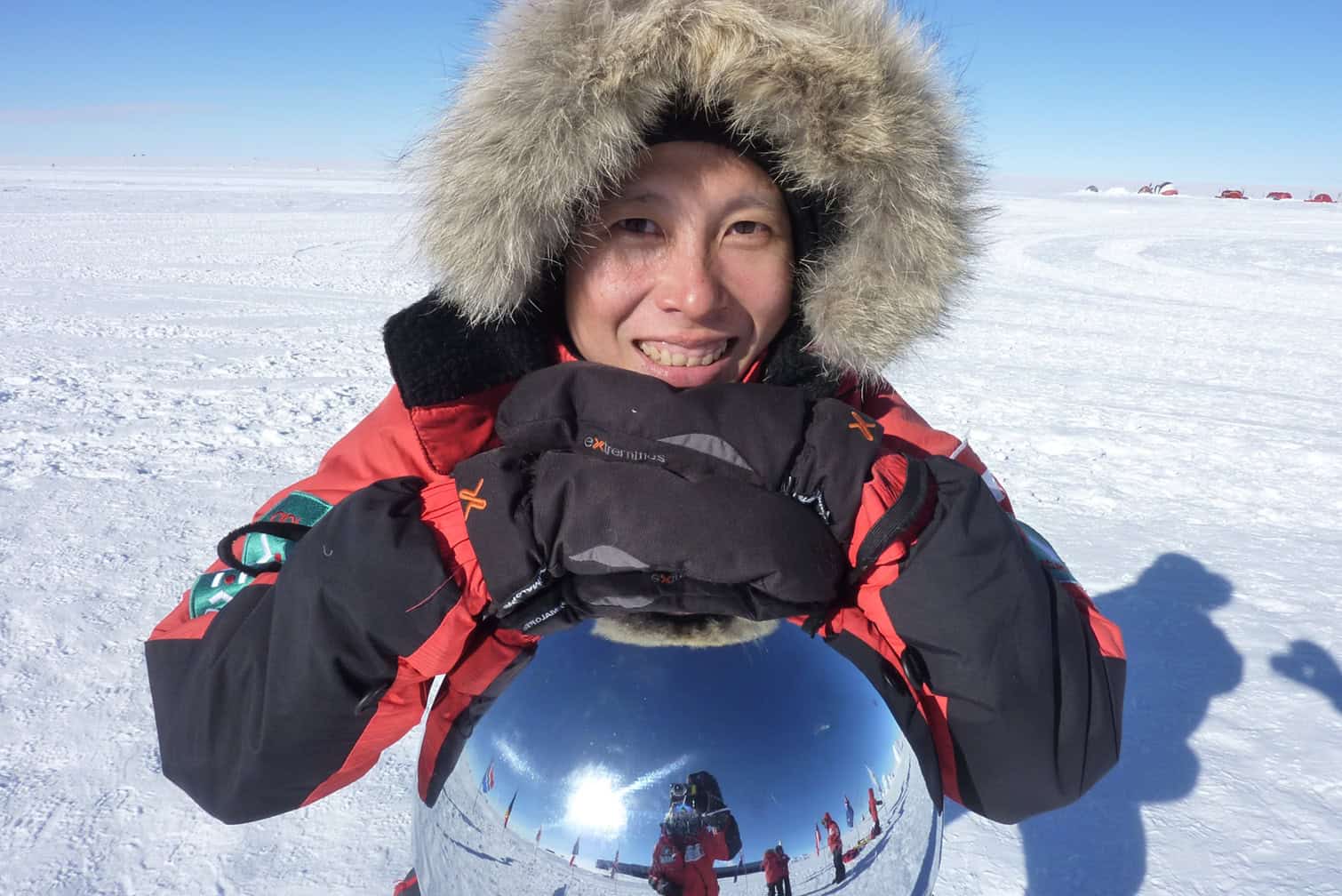
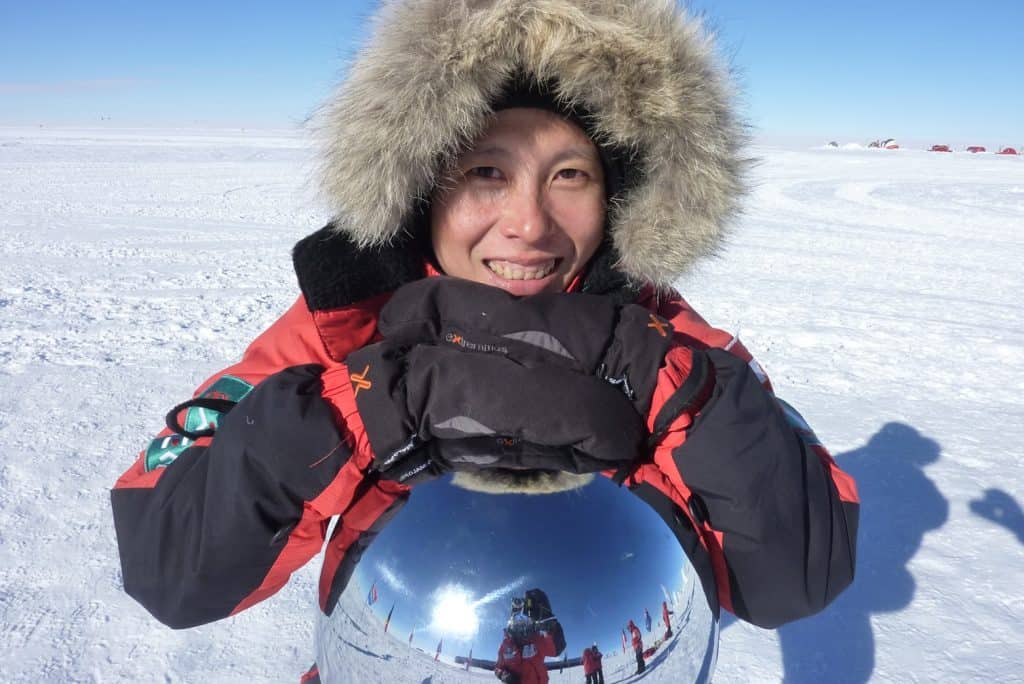
Another very different highlight was stepping away from my corporate career to join an Antarctic expedition. I joined the Kaspersky Commonwealth Antarctic Expedition and became the first Singaporean woman to ski to the South Pole.
This expedition taught me lessons about preparation, resilience, teamwork, adapting to uncertainty and continuing to move forward when conditions are difficult. Those lessons have stayed with me and continue to influence how I approach challenges at work and in life.
FutureCFO: Can you share an experience which was key to your professional growth?
SP: One lesson that has shaped my career is: explore beyond your basic training, even when something may not seem relevant at the time.
After completing my first degree in Accountancy more than three decades ago, I made a conscious decision to pursue a second degree in Computer Science. At the time, my thinking was simple. I wanted to learn something completely different from Accountancy, yet complement to what I had already learned.
Accountancy gave me an understanding of business, finance, numbers and how organisations measure and manage performance.
Computer Science, on the other hand, would give me a different way of thinking — how technology works, how systems are designed, how data can be processed, and how problems can be approached logically and systematically.
The combination might not have seemed like an obvious one at that time. There was no way of knowing how important technology would become to the finance profession decades later.
As technology evolved — now with the emergence of AI — I have found that the combination of accounting and computer science has become one of the most valuable foundations for my career. It has allowed me to understand not only the financial and business requirements, but also the technology that can enable organizations to solve problems differently.
It taught me not to think of knowledge in silos. What may seem unrelated today can become highly relevant tomorrow. Sometimes, the value of learning something new is not immediately obvious; it is only when different pieces of knowledge come together that you realise how powerful the combination can be.
That mindset has stayed with me throughout my career. I continue to learn, experiment and explore areas outside my immediate role because I believe some of the most valuable opportunities are found at the intersection of different disciplines.
For me, it is also a reminder that we should not limit ourselves to what we already know or what is directly required of us today. The skills and knowledge we choose to develop beyond our core expertise may become exactly what we need for the opportunities of tomorrow.
FutureCFO: Tell us something about yourself: What are your hobbies?
SP: Outside work, I enjoy keeping fit. I go to the gym and also teach group fitness classes. I am a Master Trainer in a mini-trampoline fitness programme.
Teaching a group fitness class is actually quite similar to some aspects of my professional work. As an instructor, I need to pay attention to the people in the room, understand that everyone has different abilities and motivations, and find different ways to encourage them to push themselves.
It has taught me to listen carefully, observe people and adapt my communication style to different individuals.
Those skills are surprisingly transferable to my work. Whether I am working with a client, colleague or business partner, everyone has a different background, perspective and way of learning. Being able to listen, connect and communicate in a way that works for them is just as important as having the technical knowledge.
I also enjoy doing simple DIY projects. I like building things from scratch, using whatever materials I can find around me. I enjoy the process of figuring things out, trying different approaches and making something work with what I have.
There is something very satisfying about starting with a simple idea and turning it into something useful with my own hands.
DIY also brings me back to the basics. In my professional life, I work with technology and increasingly with AI, where things can sometimes become quite complex. Doing something simple with my hands reminds me that, at the end of the day, good solutions do not always have to be complicated.
Sometimes, the best approach is to understand the basic problem first, work with what you have, and build a practical solution from there.
And, of course, staying active and doing hands-on projects give me a good way to switch off from work, recharge and come back with a fresh perspective.
FutureCFO: What do you want to do in the future?
SP: For the next chapter of my journey, I would like to do more in enablement, coaching and mentoring.
Throughout my career, I have had many opportunities to train people and deliver keynote presentations. Working across different areas and regions has also given me exposure to many different people, cultures, organisations and ways of working. I believe these experiences are valuable not just because of what I have learned, but because of what I can share with others.
With my past experiences in enablement, I have also learned that teaching is a two-way learning experience.
When I work with participants, I learn to see things from their different perspectives and understand how they approach a problem, what they find challenging and what they need to make a concept meaningful to them.
Their questions and perspectives often make me look at things differently too. In many ways, this encourages me to keep learning and improving myself. It reminds me that no matter how much experience we have, there is always another perspective to consider and something new to learn.
I would like to spend more time helping people connect the dots — between Finance and technology, between knowledge and practical experience, and between where they are today and where they could go next.
I am still curious about what the next chapter might bring. I don’t necessarily see it as changing direction completely. Rather, I see it as taking everything I have learned so far and using it to enable, coach and inspire others to explore what is possible for themselves.
FutureCFO: What’s your advice to female finance & accounting professionals of today?
SP: Explore and transform.
Explore beyond your immediate area — both for knowledge and for exposure. Never assume that different subject areas are unrelated. Knowledge and experiences gained in one area can often become valuable in another, whether it is technical knowledge, business understanding or simply learning how to communicate and work with different people.
And don’t be afraid to transform yourself along the way.
The world of Finance is changing rapidly with technology, data and AI. We need to be willing to continuously learn, adapt and reinvent ourselves. Your accounting or finance foundation is an asset, but it does not have to define the boundaries of what you can do.
I would also add something that is perhaps less talked about: give yourself permission to take time for yourself.
As women, we often have many roles to play — as a daughter, a wife and/or a mother, as well as a professional. Sometimes we feel that taking time away from these responsibilities is selfish. It is not.
It is alright to step away for a while, to pursue something that is just for you, to learn something new, to stay active, to travel, or simply to have time to recharge and reflect.
Only when we treat ourselves better can we support the people around us better.
For me, that is also part of transformation. It is not only about becoming better at what we do professionally, but also about giving ourselves the space to grow as individuals.