




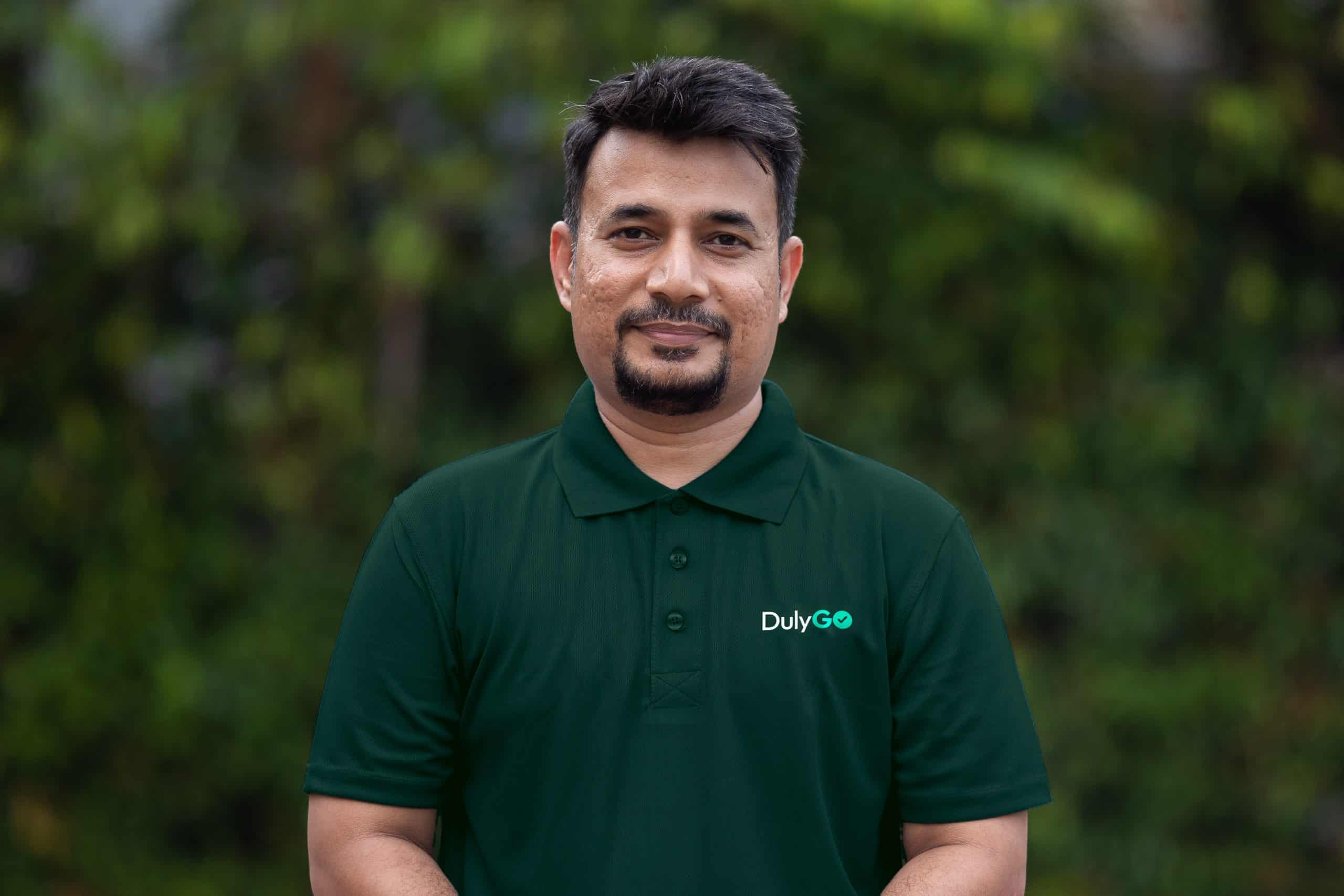
Editor’s note: In today’s A Day in the Life, Isaq Ahmed (pictured), founder/CEO at DulyGo, shares with FutureCFO audiences how the biggest growth for him professionally came from upscaling and downscaling the company and how being a parent (of four children, including triplets) helps him connect with other parents, especially colleagues.
FutureCFO: What does a typical day look like for you?
Isaq Ahmed (IA): I’m definitely not part of the 5 a.m. club.
I have been a night owl since my college days, and that has not really changed. I tend to work late, and some of my best thinking happens at night when things are quieter and there are fewer interruptions.
I join daily standups with the entire team, share what I did, and discuss blockers.
The rest of the day revolves around moving between customers, product, sales, and marketing.
Product design is very close to my heart, so I obsess over getting the workflows right with our customers and the design team.
I do take some time out for family, especially around exam time, when I coach my kids a bit.
FutureCFO: What excites you the most when you work with the Finance Function?
IA: The most exciting part of finance is how much manual work is disappearing so fast with the advent of AI. Building tools like this to help finance teams is very satisfying.
As a tech person, I find this period super exciting, with AI disrupting old ways of doing things and enabling new approaches.
With DulyGo, we are trying to make finance operations simpler by using AI to take away much of the manual work around invoices, expenses, approvals and controls.
The idea is to let finance teams spend less time chasing and processing, and more time actually managing the business.
Finance teams are evolving. They are leaner now, more hands-on, and even vibe coding tools for their own needs. They are finally breaking away from Excel sheets and formulas.
FutureCFO: Can you share an experience which was key to your professional growth?
IA: Working with an American startup from my early days instilled startup DNA in me, particularly the culture of building products to find product-market fit and discover the ideal customer profile (ICP).
Then, the journey of building startups and participating in the Y Combinator program massively impacted me as a person.
Running a seed-stage startup is very different from running a Series B company dealing with scaling issues. The entire experience has been phenomenal in my personal growth. I see people, teams and money very differently now.
Professionally, the biggest growth came from upscaling and downscaling the company.
Upscaling involved recruiting the best people when they had multiple offers, giving them the space to perform and grow, handling team conflicts, and setting the company’s culture and values, all while serving customers, fighting competition and raising funds. That is where I learned the most.
Downscaling meant working with a reduced team, so I had to pitch in on work outside my CTO role, such as sales and marketing.
Looking back, there were periods of lull where my professional growth slowed, and many instances where things skyrocketed.
In most cases, whenever I showed courage and made bold decisions, I experienced growth and good fortune. I started my first company with about a year of living expenses saved and a young family to support.
Giving up my weekends to study technopreneurship at NUS while working full-time led me to meet interesting people who opened doors in my career.
FutureCFO: Tell us about your family and how your family life influences the way you approach your career and the decisions you make, both personally and professionally.
IA: I am married and have four children, including triplets—a rare lottery.
I live in Singapore, having been here for over 20 years.
Doing startups with kids is not easy, but I knew that if I didn’t start my startup journey early, I might never find the time again. I had to make faster, bolder decisions early on.
Startups are hard, but kids and family kind of make it easier from an emotional point of view. Doing groceries, shopping for stationery and going to football games are generally good for mental health.
Being a parent also helps me connect with other parents, especially colleagues; we discuss kids and parenting issues. It’s kind of nice to see the world through a different lens.
FutureCFO: Is there anything outside work—such as a travel experience, a book, participation in a sport event or any volunteering experience—that serves as an important inspiration to your work or life?
IA: I find inspiration in the everyday things I use.
I am always fascinated by water heaters—switching on a button and getting hot water is a luxury even kings didn’t have. There are many things like that: the internet, YouTube, and now ChatGPT and AI tools.
Building things useful to humankind is a noble endeavor. They live on beyond your lifetime. Everyone benefits. Very inspiring.
I aspire to be useful, contribute to society and make it better in whichever way possible.