




In line with decoding the forces shaping Asia’s next generation of businesses, it is inevitable for the Finance team to dive deep on the matter from enterprise-level perspective.
According to a report by Aspire, the AI platform race is becoming increasingly competitive across Asia’s startup ecosystem and those from the enterprise-level are looking to know what these behaviors are signalling about the future of enterprise finance, workforce strategy, technology governance, and capital allocation.
Aspire’s Startup Signals: Decoding the Forces Shaping Asia’s Next Generation of Businesses report found that Anthropic’s Claude customer base grew 258% year-on-year, while total spend increased 17×. Over the same period, ChatGPT’s customer base grew 79%.
Against this backdrop, finance leaders ought to be on the lookout on what businesses are actually doing day-to-day, including where they are investing, how they are hiring, the tools they are adopting and how they are scaling.
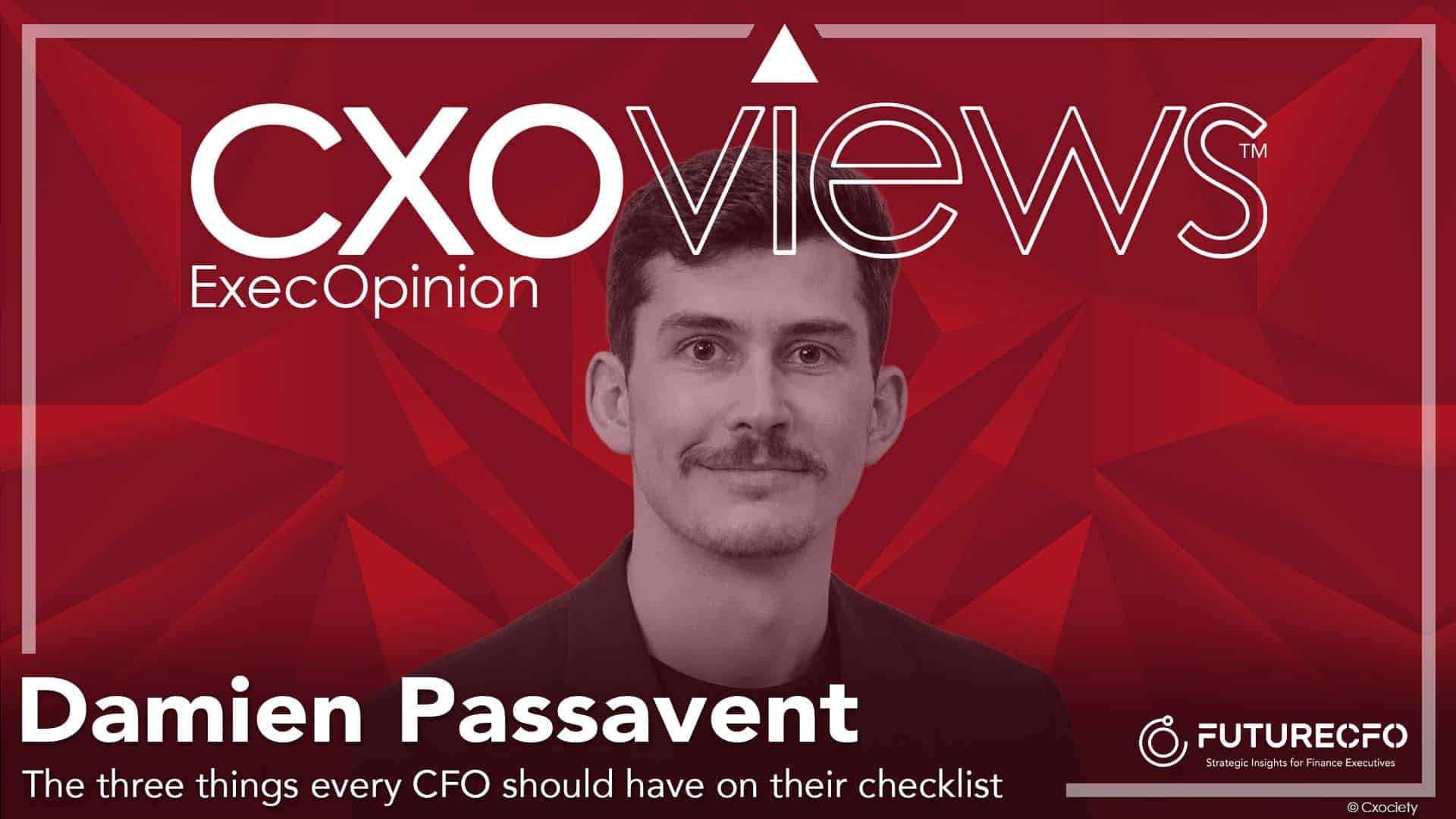
As enterprise finance teams rethink workforce planning, budgeting, and risk management in response to these increasingly flexible operating structures, Damien Passavent, chief product officer and head of mid-market growth at Aspire, believes there are three things every CFO should have on their checklist.
‘Flexibility does not eliminate risk’
According to Passavent, one in five Singapore startups now pays staff on an ad-hoc basis. Median payroll has softened while senior compensation holds firm. The workforce is splitting into two layers and most enterprises are still budgeting as if it is one.
He pointed out that the more important shift is what is now possible because of it.
“Hiring across borders used to mean months of entity discovery, local legal setup, and a long-term commitment before a single person was onboarded. That’s no longer the starting point,” he said.
That said, Passavent believes flexibility does not eliminate risk—it moves it. For him, there are three things every CFO should have on their checklist:
Permanent establishment risk: sustained activity in a country, even without a local entity, can trigger a taxable presence. That’s precisely what a well-structured employer of record (EOR) arrangement is built to manage.
Misclassification risk: a contractor who works exclusively for you, on your schedule, using your tools, can be reclassified as an employee retroactively, with back-pay and penalty exposure.
Data and IP exposure: contractors sit outside standard employment agreements, so IP assignment and data handling terms need to be in the contract itself, not assumed.
Passavent explains that getting these right is what makes the flexible model work at scale.
“For enterprise finance teams, that changes how workforce planning should work. The old model was: commit to a market, set up an entity, hire a team.”
He said that this sequence carried real exit costs if the market did not perform.
“The new model lets you resource first and commit later. Hire a senior engineer in New York or a finance lead in London, test whether the market warrants deeper investment, then decide what permanent presence requires.”
He adds that this is how startups have always operated out of necessity, highlighting that enterprises now have access to the same tools and the same freedom.
“For a CFO, the question worth asking is: where are we still running the old sequence when we don’t have to?”
Damien Passavent, CPO & head of mid-market growth, Aspire
Evolution in investment evaluation frameworks
As AI evolves from an experimental tool to core operational infrastructure, finance leaders must gear up their investment evaluation frameworks to measure the long-term return on AI spending beyond traditional productivity metrics.
Passavent believes productivity was the easy first metric: did this save my team time? However, he said this is not enough once AI is inside the close process itself.

He opined, “a better framework looks at three things: efficiency, the time and cost saved; control, the error rate and how much still needs a human to check it; and flexibility, whether switching providers later gets easier or harder.
He adds, “one important point on timing: there’s no value in measuring ROI during the discovery phase.”
Passavent suggests to let teams use the tools and see what works in the organisation, as it will vary depending on process maturity, data quality, and people.
“Measure once you’re through discovery and real implementations are embedded across multiple processes. Most finance teams are still in a 30 to 60 day pilot phase.”
He said the real return shows up 60 to 90 days in, once AI is wired into the close and the team shifts from processing transactions to reading them. Finance teams, according to Passavent, can build the evaluation framework for that second stage, not the first.
AI and governance for enterprises
Considering the Aspire’s report that suggests businesses are increasingly adopting multiple AI platforms rather than standardising on a single provider, CFOs from large enterprises ought to balance the benefits of a multi-AI strategy against concerns around governance, security, cost control, and vendor management.
For Passavent, the data is clear, as the number of startups running three or more AI platforms at once more than doubled in a year. He noted that the average startup now runs close to two.
“This isn’t indecision. It’s how teams are actually building,” he pointed out.
He conceded that for enterprises, the stakes are higher, but explained that the governance principle is the same regardless of how many tools they run.
“Data security, staff training, hallucination risk: these need to be documented and tested rigorously for every AI platform, not just the primary one. The last thing a finance team needs is a hallucination in a forecast model or a financial report.”
Passavent stressed that the more important distinction is which kind of AI one is adopting. “AI-native tools, built from the ground up with automation and intelligence at the core, operate differently to legacy systems with AI layered on.”
He said the former can transform how finance works, while the latter adds a layer of complexity without changing the underlying process.
“For a CFO, that’s the more consequential vendor management question: not how many platforms, but whether the platforms you’re running are actually built for this.”
Regarding cost, Passavent said AI spend does not behave like a fixed SaaS subscription, as it scales with usage, often invisibly, and most finance teams are tracking it through tools built for predictable vendor costs.
“The CFOs getting ahead of this are using AI-native financial systems that surface spend at the team or workflow level in real time, rather than retrofitting old tools to handle a new cost category.”
Spending patterns
As startup spending patterns are often viewed as an early indicator of broader business transformation and considering the emerging trends from AI adoption to workforce models and operating flexibility, it is noteworthy to find out what CFOs should be monitoring most closely to ensure their organisations remain competitive and resilient
For Passavent, three things stand out, in order of how fast they are moving.

First, according to him, token economics are about to become a real budget line. “Most AI spend today scales linearly with usage, and usage is climbing fast. Some companies are now seeing bills jump from five figures to seven figures within months, often without the underlying work changing.”
He noted that the same file gets re-fetched, the same transcript pulled into context by three different agents that never share what they learned.
“CFOs need to start asking the same questions of AI spend that they’d ask of any other vendor cost: what’s driving the bill, and is it work or is it waste?“
Second, he said AI architecture decisions made now will be costly to unwind later, especially if one is signing long-term contracts one cannot easily exit. Which models get embedded in core workflows is a board-level question today, not something to revisit once the stack is locked in.
Third, Passavent explained the speed of change is the real signal.
“A gap that was 4.2x a year ago is 1.5x now. Any single advantage in tooling or cost structure has a shorter shelf life than it used to.”
He believes the skill CFOs need is not picking the right tool today. It’s building the habit of re-evaluating fast, on both adoption and cost.