





As organisations rapidly adopt AI, it still should be noted that many are struggling to scale effectively as governance, infrastructure and operational readiness lag behind.
In a report by Nutanix, it was found that 68% of leaders acknowledge that their infrastructure is not fully equipped to support AI workloads on-premises, while 64% rely on third-party providers to bridge that gap.
These all come alongside the reality that shadow AI is widespread and poses significant risk, governance and process have emerged as the biggest barriers, and data sovereignty is creating growing tension.
With these at hand, it is important for finance leaders to be able to underscore the critical need to better align infrastructure, governance, and operational processes to ensure AI can be deployed securely and compliantly.
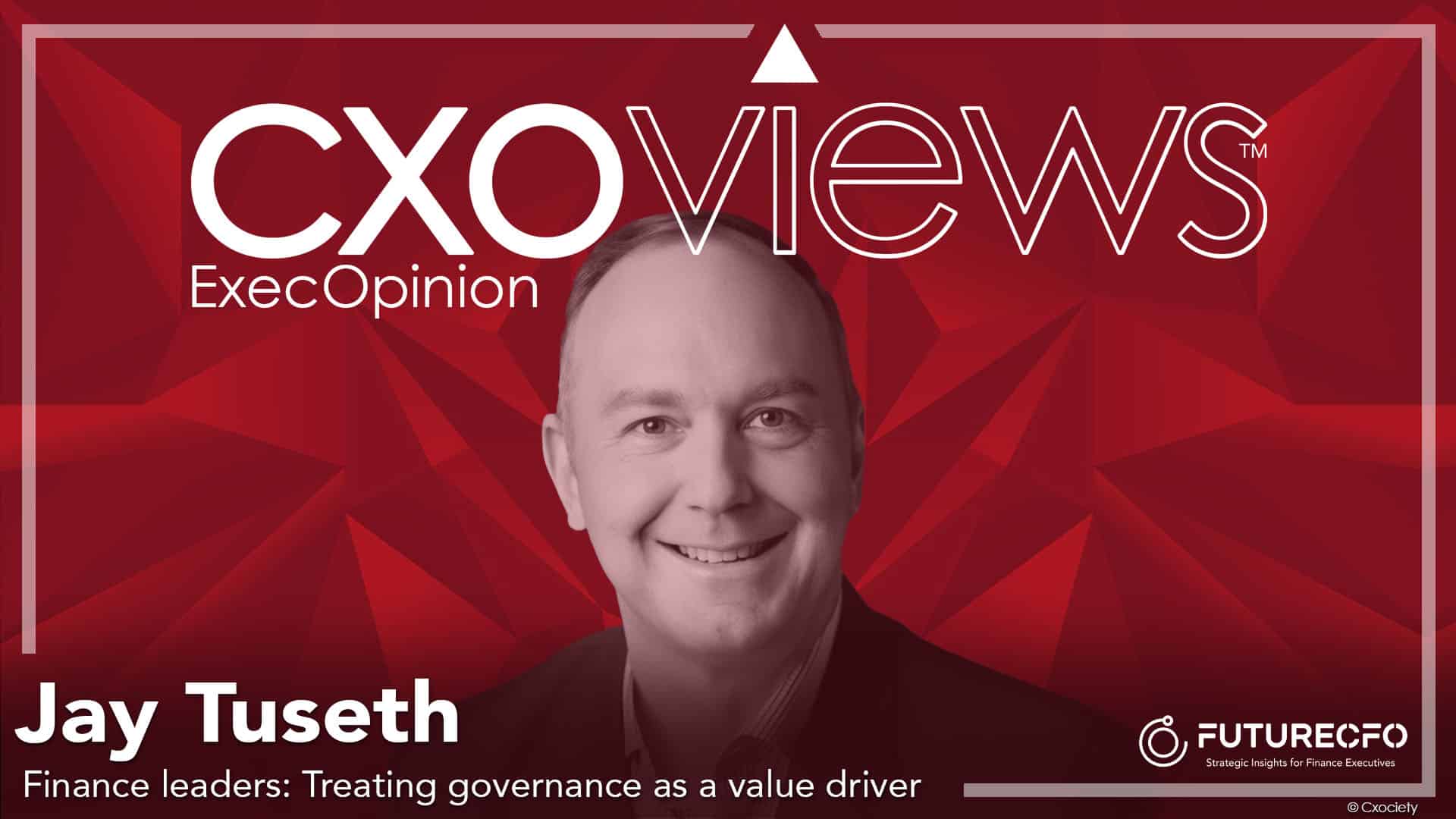
Jay Tuseth, vice president and general manager, APJ at Nutanix, believes finance leaders must treat governance as a value driver that enables AI to scale responsibly, not the force that slows it down.
He says the CFO’s primary role is ensuring that the organisation’s risk appetite is matched by adequate investment in governance.
The role of finance leaders
With governance and process cited as the biggest barriers to AI deployment, finance leaders are tasked to establish the oversight frameworks needed to balance innovation, risk management, and regulatory compliance.
Tuseth says according to Nutanix’s 2026 Financial Services Enterprise Cloud Index (ECI) report, process complexity and organisational factors, including leadership and skills gaps, outweigh technical limitations as the biggest barriers to scaling AI.
“This points to a gap that finance and business leaders, not just IT, are responsible for closing.”
He notes that oversight frameworks must be engineered into AI architecture from the outset across the design, development, and deployment, rather than bolted on after the fact.
“This is especially critical in a trust-based and highly-regulated industry like financial services,” says Tuseth. “CFOs should collaborate with technology and risk leaders to ensure any AI pilot is tied to clear infrastructure and governance milestones before it moves to production scale.”
Tuseth says this includes defining who owns accountability for each workload, mapping regulatory requirements, and budgeting for the necessary compliance controls.
“Ultimately, funding AI initiatives without funding the guardrails around them creates severe risk exposure that will cost significantly more to remediate later than to build correctly from the start.”
AI adoption
As AI adoption accelerates, many organisations still lack the infrastructure needed to support AI workloads at scale. This prompts CFOs to approach investment decisions around AI infrastructure to ensure they can support future growth without creating unnecessary technology debt.
Tuseth believes CFOs must treat AI infrastructure as a long-term investment, not as a short-term sprint.
“While significant capital continues to flow into model training, the industry is now also grappling with the harder operational challenge: scaling inferencing and agentic applications in real business environments in a way that generates measurable ROI.”
Further, he points out that capital allocation needs to reflect both imperatives.
“Three priorities stand out,” says Tuseth. “Firstly, most financial institutions are not running clean, container-native environments. They are managing a hybrid reality where container-based AI applications must run alongside legacy virtual machine-based (VM) systems across on-premises, public cloud, and edge environments.”
He stresses that CFOs should prioritise unified platforms that support both containers and VMs across distributed environments without creating new operational silos.
“Secondly, the industry is currently facing a highly constrained supply chain for critical components like memory and CPUs, driven by massive hyperscaler spending.”
Tuseth thinks that in this environment, costly “rip-and-replace” programmes are neither practical nor financially responsible.
“CFOs should look to flexible platforms that extend the useful life of existing storage and compute infrastructure, to reduce immediate capital expenditure.”
Jay Tuseth, VP and GM, APJ, Nutanix
Thirdly, the Nutanix VP says generative and agentic AI applications scale, public cloud operational costs can quickly spiral due to unpredictable, per-token fees.
“Owning internal GPU infrastructure allows firms to operate within a strictly bounded cost envelope, while utilising an AI gateway can provide governance controls needed to prevent runaway consumption.”
Shadow AI
As the prevalence of shadow AI highlights growing concerns around visibility and control, CFOs are expected to work alongside technology and risk leaders to ensure AI adoption delivers business value while maintaining appropriate financial, operational, and compliance safeguards.
Tuseth concedes that shadow AI is already pervasive, citing the latest Financial Services ECI report which found that 66% of financial services IT executives report employees using unsanctioned AI tools, and 86% say this creates business risk.
“The root cause of this is organisational friction: when internal silos make official channels too slow, teams under pressure bypass IT entirely, exposing the business to regulatory, operational, and security vulnerabilities.”
He believes the answer is not restriction, as restriction simply drives the behaviour further underground.
“The solution is making the governed path easier to use than the ungoverned one. For heavily-regulated financial services organisations, the most effective response is to deploy a unified platform that gives employees governed access to the AI tools they want.”
He explains that this reduces the friction that drives shadow AI in the first place, allowing teams to innovate with agility while maintaining the access controls and data sovereignty the industry requires.
“CFOs have a direct role here because shadow AI is ultimately a resourcing and prioritisation problem: if the sanctioned path is underfunded or plagued by delays, workarounds will fill the gap.”
He says investing in practical, governed infrastructure is fundamentally a risk management decision. Left unaddressed, the compliance and operational exposure that shadow AI creates will cost significantly more to remediate than it would have to prevent.
Evaluating trade-offs
As many institutions increasingly rely on third-party providers to support AI initiatives, finance executives must be able to evaluate the trade-offs between outsourcing AI capabilities and building internal infrastructure, particularly in areas such as cost efficiency, resilience, and data sovereignty.
Tuseth says evaluating these trade-offs is not a binary choice between public and private; it is a matter of smart workload placement.
“Finance executives must adopt a hybrid lens. Public clouds offer undeniable speed and agility for initial AI experimentation or temporary capacity bursts.”

However, for predictable, long-term production workloads, Tuseth notes that internal or hybrid infrastructure often delivers superior cost predictability and control. He says the goal is to place each workload where it optimises performance while minimising risk.
“By prioritising strategic placement first, institutions avoid rushing indiscriminately into the public cloud and accumulating ‘sovereignty debt.'”
Further, moving sensitive intellectual property outside corporate boundaries can create direct tension with regulatory requirements.
“True sovereignty requires a multi-dimensional approach: data localisation, strict jurisdictional boundary controls, and infrastructure self-reliance.”
While the public cloud is a valuable tool, Tuseth says sole dependence on a single provider introduces severe concentration risk. He notes that striking the right balance across both public and private environments ensures compliance and acts as a vital insurance policy against operational disruption.
Measuring success
AI is expected to transform decision-making, customer engagement, and operational processes across financial services.
Regarding what metrics CFOs and finance leaders should prioritise when measuring the success and long-term return on enterprise AI investments, Tuseth explains that long-term return on investment (ROI) from enterprise AI will not come from building models, but from real-world inferencing and agentic applications that deliver measurable business outcomes.
“As such, CFOs should anchor their measurement frameworks around three categories,” says Tuseth. “First, operational efficiency: tracking concrete productivity gains from AI deployment, such as time saved per workflow or percentage increase in staff capacity per AI-assisted process.”
He recounts that these process-level metrics are what translate AI spend into demonstrable business value, and that without them, AI investments risk visible on the balance sheet but impossible to defend in the boardroom.
“Second is workload progression. CFOs must measure the proportion of AI projects that successfully progress from pilot into production within a defined timeframe.”
Tuseth says many initiatives stall in the “proof-of-concept” phase before they generate returns, making this a critical leading indicator of whether the organisation is genuinely scaling AI or simply accumulating expensive experiments.
“Finally, compliance continuity: tracking whether AI scaling is occurring without creating new regulatory or security exposures.”
Together, Tuseth believes these metrics shift the CFO’s lens from total spend to actual outcomes — ensuring AI investment is judged not by its ambition, but by what it demonstrably delivers to the bottom line.