





In 2026, Indonesia’s private healthcare sector stands at a transformative inflexion point. Demand remains structurally robust, propelled by a population exceeding 280 million, near-universal JKN (BPJS Kesehatan) coverage approaching 96% of citizens, and rising non-communicable diseases.
Yet growth has become more selective, demanding tighter operating discipline in an asset-heavy industry.
Private hospitals, which account for roughly 63% of the country’s facilities and about 180,000 beds, operate in a “dual-speed” market: high-volume, cost-disciplined mass-market players serving JKN patients alongside premium providers targeting affluent self-pay and private-insurance segments.
Regulatory evolution adds layers of complexity. The national health insurance system continues expanding access while tightening reimbursement frameworks and tariffs. Broader payer-side policies push transparency and standardisation.

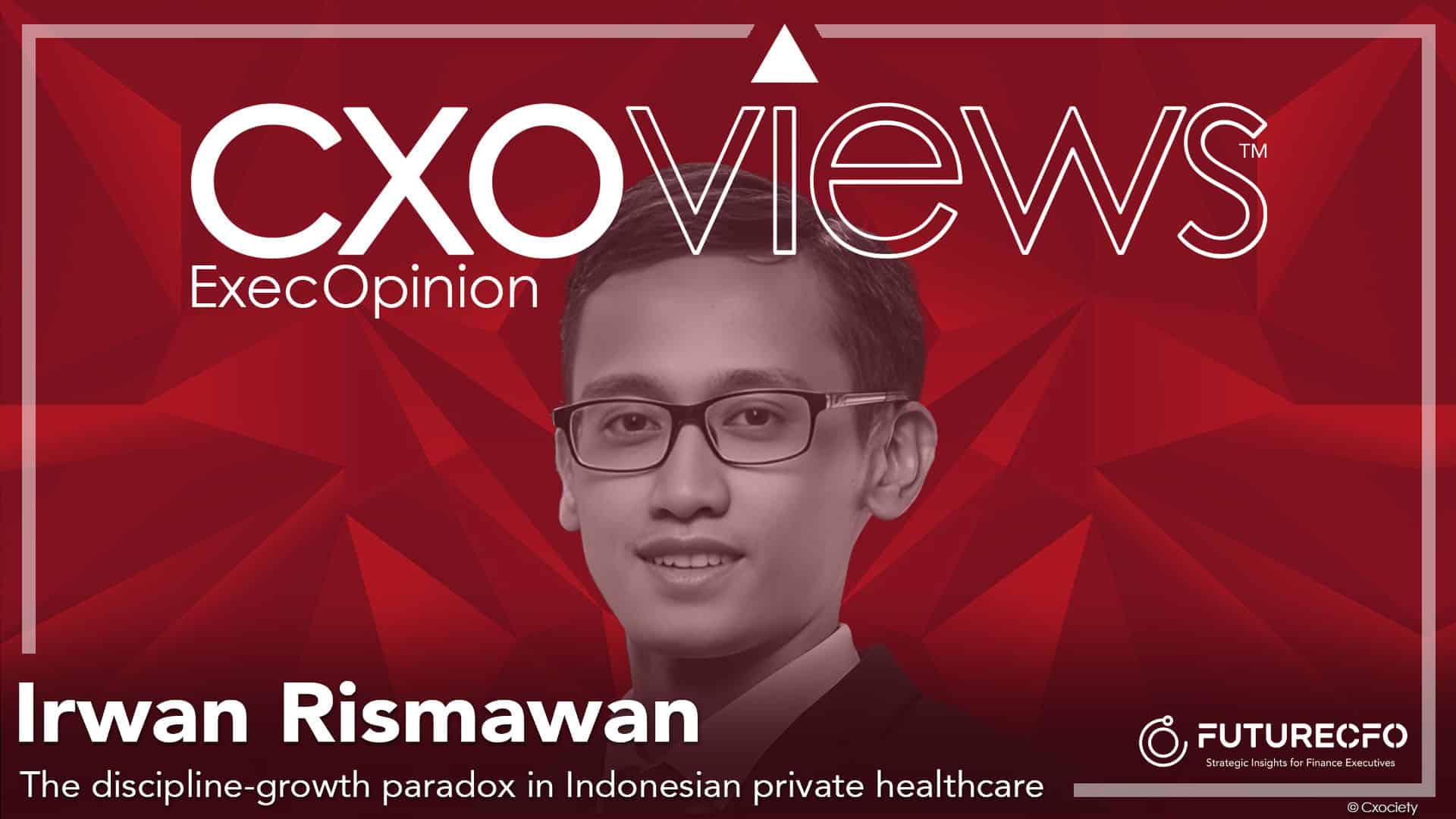
As Irwan Rismawan, CFO of Primaya Hospital Group, observes: “The challenge for 2026 is precision: aligning diverse care pathways—from JKN to private insurance—with service levels that are both clinically superior and financially sustainable.”
This paradox—scaling aggressively while enforcing financial and operational rigour—defines the sector. Local pressures include thin JKN margins and physician practice variation; regionally, ASEAN peers like Thailand and Malaysia offer higher per-capita spending benchmarks (US$430–530 vs Indonesia’s US$80–200), highlighting under-penetration opportunities; globally, value-based care, digital integration, and climate-resilient infrastructure set new standards.
The co-pay shift: From price to partnership
A landmark regulatory change arrived in March 2026, when OJK made co-pays optional and capped them at 5% (or IDR 300,000 for outpatient / IDR 3 million for inpatient, maximum).
The original 10% mandatory rule was scrapped after concerns about patient affordability, shifting risk dynamics, and intensifying insurer focus on cost control through network restrictions and tariff negotiations.
Hospitals can no longer compete solely on price. Rismawan explains: “The discussion is shifting from ‘What does this procedure cost?’ to ‘How effectively can you manage the patient’s total journey?’”
Providers must reframe their value as strategic clinical partners through clinical predictability, outcome-based differentiation, and operational transparency—standardised pathways, reduced readmissions, and digital integration for seamless pre-authorisations.
Those demonstrating measurable outcomes and administrative efficiency become indispensable in preferred networks, turning regulatory pressure into competitive advantage.
Capturing downstream value
As fee-for-service margins compress, CFOs are pioneering “gateway pricing” for high-volume services like screenings and diagnostics.
These act as strategic entry points to lower barriers for early intervention, driving patient acquisition and downstream revenue through coordinated follow-up care. Full-episode bundled packages further align incentives: payers gain cost certainty, hospitals eliminate inefficiencies.
Rismawan stresses the CFO mandate: ensure these models rest on “robust cost visibility at the procedure and pathway level, disciplined margin management across the full episode of care, and data-driven insights to refine pricing and outcomes continuously.”
The goal shifts from optimising single transactions to maximising lifetime patient value—financially sustainable and clinically meaningful.
This approach resonates beyond healthcare; CFOs in any capital-intensive sector facing commoditisation can apply similar pricing discipline to protect margins while fuelling growth.
Clinical accountability at scale
Physician practice variation remains a primary source of inefficiency and quality inconsistency. As networks expand, CFOs must move beyond traditional oversight to embed clinical accountability frameworks linking decisions to outcomes and resource use.
Primaya’s approach—standardised pathways, transparent metrics, peer-review dialogues, and tighter clinical-management alignment—illustrates the shift. Rismawan notes: “Success in 2026 belongs to organisations where clinical excellence and financial discipline are not competing priorities, but mutually reinforcing outcomes.”
This governance model reduces unwarranted variation without stifling judgment, offering lessons for CFOs in any industry managing professional talent at scale: data transparency and incentive alignment turn variability into controllable, measurable performance.
Operational rigour as the self-funding engine
Sustainable expansion cannot rely solely on external capital. High-impact levers include ABC-VEN analysis for drug supply optimisation, shifting care to lower-cost ambulatory and day-care settings, tightening internal referrals to minimise leakage, and diversifying into high-margin specialities such as IVF, eye centres, and home care.
Rismawan articulates the vision: “Our goal is a self-funding growth engine. By optimising utilisation and cash conversion, we ensure that expansion is disciplined, sustainable and less reliant on external financing.”
In an asset-heavy environment, these levers improve return on invested capital (ROIC) and liquidity—principles transferable to any growth-oriented CFO navigating tight capital markets or regulatory cost pressures.
Building a digital moat against patient steerage
Insurers and TPAs are constructing digital front doors to direct patient flows. Hospitals counter by accelerating API-based integrations, real-time eligibility checks, and patient-centric apps that reduce friction and DSO (days sales outstanding).
Primaya’s “Sasya” AI platform and Express Discharge collaborations exemplify this: ease of access becomes a competitive differentiator.
Rismawan frames digital not as an IT cost but a strategic defence: “We are not just providing care, we are providing a frictionless financial and clinical journey.”
For CFOs across sectors, this underscores a broader truth—digital integration is now table stakes for protecting volume, accelerating cash cycles, and creating ecosystem stickiness.
Human-centric resilience: The hidden balance sheet
Relentless margin discipline risks eroding the human capital that sustains growth. Rismawan defines “human-centric resilience” through measurable indicators: leadership retention, workload-to-growth alignment, clinical quality as a proxy for burnout, and medical-management synergy. “Growth that exceeds human capacity is, by definition, insolvent.”
Tracking these alongside traditional financials ensures expansion strengthens, rather than strains, the organisation. This perspective offers universal relevance: any CFO driving aggressive scaling must treat cultural health as a leading indicator of long-term ROIC.
Taste, clinical leadership, and institutional legacy
In a replicable world of AI and standardised operations, brand “taste”—intentional patient experience, hospitality-inspired service, and visual identity—becomes the uncopyable moat. Rismawan argues that this distinction, built internally first, drives loyalty and premium pricing.
Simultaneously, nurturing “physician-scientists” who bridge clinical practice with economics and innovation positions clinicians as credible peers to insurers.
By 2030, success metrics expand beyond occupancy and margins to institutional durability: self-funding growth, clinical consistency, internal referral strength, and leadership depth.
Rismawan concludes that the CFO’s role is “to ensure that every capital allocation today contributes to a legacy of consistency, transparency, and integrity.”
Reconciling the paradox

The discipline-growth paradox is not a zero-sum trade-off but a virtuous cycle. Indonesia’s private healthcare—projected for sustained expansion amid demographic tailwinds, insurance maturation, and digital acceleration—rewards those who master precision, accountability, and human-centric execution.
By blending rigorous operational levers with strategic foresight, CFOs like Rismawan are building resilient institutions that thrive locally while benchmarking against global best practices.
The lesson extends far beyond hospitals: in any maturing, regulated industry, disciplined execution is the ultimate enabler of sustainable ambition.