




As young professionals paddle through the seas of opportunities in the market, particularly in the finance function, it is more than helpful to gain insight from the inside.
Demand for Engineering, Procurement, and Construction (EPC), for one, surges in power generation and is projected to hit US$12.1 bilion by 2031 at 7.3% CAGR.
Meanwhile, oil/gas exploration, and FMCG factories, are fuelled by urbanisation and renewables like solar/geothermal.
In Indonesia, regional shifts beyond Java to Sumatra and Sulawesi demand multi-site capabilities, as industry 4.0 integrates IoT, AI maintenance, robotics, and modular builds.
Process excellence prioritises compliance with Halal, BPOM, and green standards, alongside net-zero pushes via solar PV and waste-to-energy.
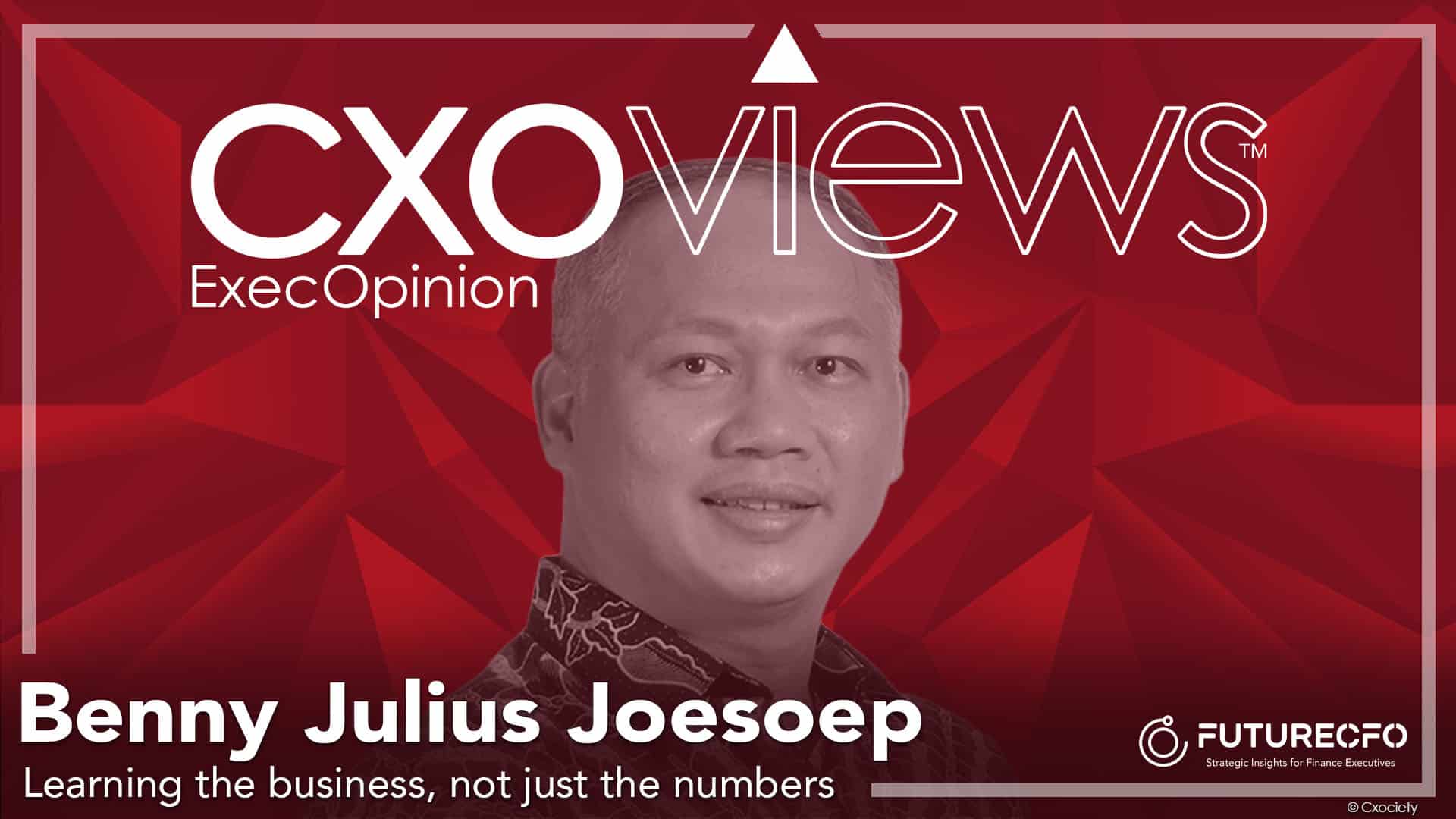
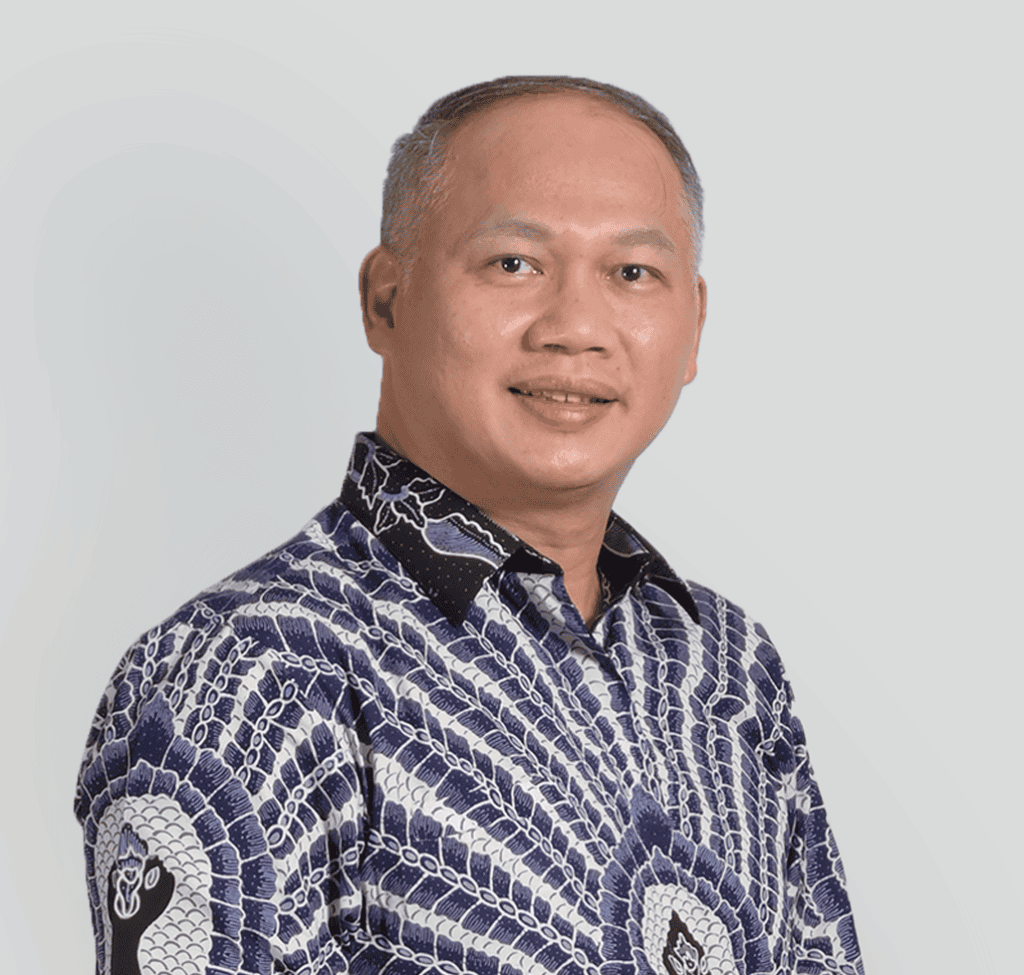
For Benny Julius Joesoep, financial and commercial director at PT Tripatra Engineers and Constructors, finance becomes much more valuable when one understands the operational drivers behind financial result.
For this matter, he advises young professionals: “learn the business, not just the numbers.”
For one to become successful in their craft, especially in finance, one must go beyond the numbers—checking behind the permutations, to have a full grasp of what the business is all about.
Joesoep reflects on the early stages of his career, highlighting initial learnings that shaped his approach to financial management in high-stakes energy projects.
Valuable lessons on cost control
Considering Joesoep’s experiences optimising CapEx and OpEx across complex project timeline, he recounts on valuable lessons on cost control for young professionals to heed.
He says he learned that in actuality, cost control in large projects actually starts much earlier than most people think.
“Many people associate cost control with monitoring expenses during project execution. But in reality, the last portions of the total project cost is already determined.”
He explains, “During the engineering and design phase. Once the projects moves into procurement and constructions, it become much harder to fundamentally change the cost structure.”
Joesoep says because of this, finance teams needs to engage early in the process and work with engineering and project teams, adding that sometimes the role of finance is simply to ask the right questions.
He notes that even relatively small engineering designs can lead to significant cost implications. That is why when finance participate in those discussions early, it can help to balance technical constitution with sustainability.
“Another important lesson is the need to look forward rather than only backwards.” He continues, “so traditional financial reporting tell us what has already happened. In project especially constructions project environment, however, what matters is whether the project will remain viable going forward.”
Joesoep explains that this is why specific tools in forecasting and performance indicators become extremely useful.
He advises young professionals, for this matter, to spend time understanding how the business actually works.
“Talk to your engineers, talk to your designers, talk to your people on the sites to really understand, because numbers are much more meaningful when you understand the operational decision behind them.”
“The earlier we can be involved and we can influence is actually the better.”
Benny Julius Joesoep, finance and commercial director, TRIPATRA
Realisations on risk mitigation
In terms of risk mitigation, Joesoep says, considering the construction industry he is in, many factors could influence and will influence the way they do projects.
This is especially true when taking into account the various stakeholders, technical uncertainties, and changing external conditions.
“One thing I learned from managing difficult projects is that when problem occurs, the root cause is often not purely financial. Very often the issue lies in commercial arrangement, contractual structures, or coordination between stakeholders.”
Joesoep notes that when one project faces difficulties, it is important to step back and look at the whole picture.
“Finance professional cannot solve these issues alone,” he points out. “They must work closely with commercial teams, project managers, procurement specialists, and sometimes external parties to identify the real source of the problem. Sometimes, we need to have an independent third party.”
He adds, “Be more transparent, be more communicative as early as possible.”
He believes that young professional entering finance, especially in the project environments like where he is now, should learn about contract and risk allocations, not only financial reporting, noting that one must understand the commercial matters about it.
Digital transformation
Depending on the industry, the implementation of modernisation can sometimes be fast, and other times slow, but it always seems to be consistent.
Joesoep says that in the last ten years, digital transformation has become not only a buzzword, but something more.
He thinks that although this is something that many organisations are pushing today, it is often more complex in practice than people initially expect.
He observes that technology itself is not really the most difficult part and is not an issue, as one can easily pick up whatever off-the-shelf IT solutions they would need for their organisation.
He says organisations often spend a lot of time selecting the right systems, whether ERP platforms or procurement tools, but the bigger challenge usually lies in how the company adapts to new ways of working.
“If the underlying business process are unclear or inconsistent, implementing new digital system may simply replicate the same inefficiencies.”
Joesoep adds that when digital transformation works well, the benefits can be significant.
“Organisations can gain better transparency, improve data quality, (and) faster access to information,” says Joesoep, highlighting that it is necessary that finance teams move away from manual reconciliation and focus more on analysis analytical works and and decision supports.
Four variables
Joesoep says there are the four variables that would basically determine whether or not a digital transformation will be successful or not: alignment between corporate strategy, organisational readiness, leadership commitment, and people capabilities.
“It’s not only about buying a new software and and (thinking) that everything will be fine.”
Joesoep explains that alignment between the corporate strategy and the IT strategy involves how the organisation is and how committed the leaders are. He notes that it is important to make sure that all this digital transformation can not only transform, but also upgrade the people capabilities.
He advises young professionals to become more comfortable with the data and digital tools, but it is equally important to understand how those tools connect with real business processes.
Learnings on sustainability compliance
Considering that the EPC industry and its clients are heavily regulated in terms of sustainability concerns, Joesoep says sustainability considerations have become increasingly central to their business operations.
As EPC service providers or enablers, he learned that compliance cannot simply be treated as a reporting exercise, especially for the from the finance perspective.
“If sustainability requirements are addressed only after key decisions have been made, (the) organisation will constantly struggle.”
He adds that this is not only about reporting. Instead, this consideration needs to be integrated, considering how projects are designed and managed from beginning.
Advice
Joesoep advises young professionals to develop strong analytical and communication skills, as finance leaders often bridge the gap between data and strategic decisions.
He adds that as careers in finance functions evolve quickly, especially now with the digital transformation. That is why one must be curious, adaptable, and courageous.
“The most valuable finance professionals are those who understand both the numbers and the business behind them.”