





AI adoption among organisations in the Asia-Pacific region has become widespread, with more and more companies in the region integrating the technological advancement into their operations.
In a report by SEON, it was found that 97% of organisations in APAC have already integrated AI into their daily workflows, and 96% are confident in AI’s reliability.
Against this backdrop, it was also revealed that unified visibility remains difficult to achieve, as organisations still grapple to get a unified view across fraud and AML systems.
The report points out that 2026 will be less about whether organisations adopt AI, and more on whether or not they can keep up with fraud pressure while staying joined up, auditable, and efficient.
It should be discussed then, from a CFO’s standpoint, what the key operational gaps are—such as fragmented visibility and partial workflow integration—that should be prioritised.
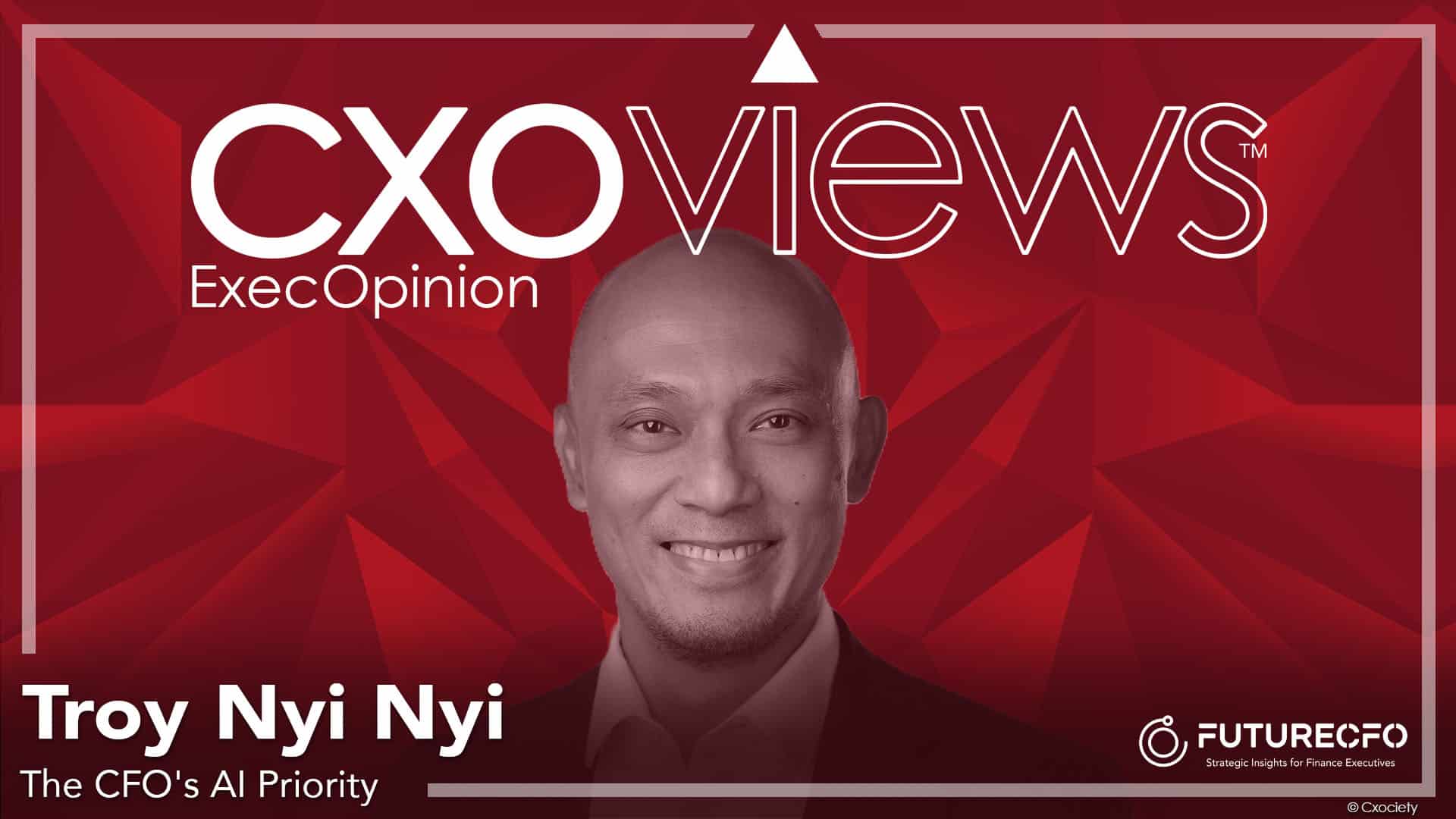
Troy Nyi Nyi, SVP & GM, APAC at SEON, believes that for CFOs and financial leaders, the priority is not simply whether the organisation has adopted AI, but whether that investment is improving control, visibility and decision quality across the business.
“Fraud and AML have become financial performance issues because they affect loss exposure, customer conversion, operating cost and regulatory confidence at the same time,” says Nyi. “The biggest operational gap is that many institutions still manage risk through fragmented systems. Fraud, AML, compliance, digital operations and customer teams may each hold part of the picture, but no single team sees the full risk context across the customer lifecycle.”
He adds that the gap between AI integration in operations and the challenges concerning having a unified view
across fraud and AML systems should concern finance leaders as it unfolds AI confidence is running ahead of operational visibility.
“Another key issue is also the partial workflow integration,” Nyi points out. “If teams still need to reconcile alerts, customer data, screening outcomes and investigation notes across multiple systems, the organisation may be adding automation without reducing complexity.”
He explains that CFOs should prioritise the connective layer between systems, teams and decisions, because that is where AI investment turns into measurable outcomes such as faster investigations, lower manual review costs, stronger audit trails and more consistent risk decisions.
The impact
In terms of the impact of the lack of unified visibility across fraud and AML systems on financial performance, risk exposure, and audit readiness at an organisational level, Nyi explains that fragmented visibility creates financial drag because it slows investigations, increases manual work and makes it harder to distinguish between genuine
customers and high-risk activity.
“Over time, this affects both sides of the profit and loss, through fraud losses and compliance costs on one side and customer friction or lost revenue on the other.”
Nyi notes that the financial impact is becoming harder to ignore, as according to their report, across APAC, 55% agree or strongly agree that fraud losses are growing faster than revenue, while 38% estimate that more than a quarter of false positives are caused by limitations in data sources.
“Fragmented visibility is not the only cause, but these findings show how weak data foundations can create financial consequences, from missed risk signals to unnecessary friction for legitimate customers.”
Moreover, Nyi points out that audit readiness is another major concern.
“Financial leaders need to explain more than the final decision. They need to show why a transaction was escalated, which signals were used, whether the decision was reviewed, and whether the same logic was applied consistently.”
Troy Nyi Nyi, SVP & GM, APAC, SEON
He says that when fraud and AML systems remain fragmented, those answers become harder to produce quickly.
“A unified view strengthens the evidence trail behind each decision, giving leadership greater confidence that outcomes can be defended internally, with partners and with regulators.”
Strategies for finance heads
As institutions continue to expand and refresh their vendor ecosystems, it is only telling that finance leaders adopt strategie to modernise effectively without introducing unnecessary complexity or cost inefficiencies.
Nyi says the finance function has an important role to play in preventing modernisation from becoming uncontrolled tool expansion.
“New fraud and AML vendors can bring valuable capabilities, but each additional platform also brings cost, integration work, data governance requirements, and change-management pressure.”
He explains that if those costs are not visible upfront, the business may end up with a more expensive stack that is still difficult to operate.
Further, Nyi says the SEON report points to an active modernisation cycle in APAC, where 89% plan to add a fraud or AML vendor in 2026, while 42% already use multiple vendors and combine data internally.
“For CFOs, this makes vendor strategy a question of architecture, not just procurement. New tools should be assessed on whether they reduce operational complexity, improve signal quality, and strengthen governance, rather than simply adding another layer to the stack.”
He adds that a stronger approach is to evaluate vendors based on whether they improve the institution’s operating model, not just its technical capability. He believes financial leaders should look at whether a solution connects into existing workflows, shortens investigation time, reduces duplicated work, improves auditability, and helps teams make consistent decisions across fraud and AML.
“Modernisation should not be measured by the number of tools added,” Nyi says. “It should be measured by whether the organisation becomes faster, clearer, and more resilient in how it detects, investigates, and acts on risk.”
Evaluating AI investments
CFOs are in need to evaluate investments in AI and compliance technologies to ensure measurable ROI
while maintaining operational resilience.
For this to work out, Nyi says they should treat AI and compliance technology as risk infrastructure, not just technology procurement.
“The business case should go beyond license cost or automation potential and consider whether the investment improves speed, control, scalability and defensibility.”
He explains that in fraud and AML, ROI often shows up through avoided losses, lower false positives, reduced manual review effort, faster onboarding, better case resolution and stronger compliance confidence.
“This matters because the cost of modernisation is not limited to the purchase decision. In APAC, 90% expect fraud and AML compliance budgets to increase in 2026, but 23% say their most recent fraud or AML vendor took four months or more to go live.”

He says long implementation timelines can delay returns and leave teams dependent on manual workarounds or legacy controls for longer than expected.
“From a capital allocation perspective, CFOs should therefore evaluate both the promised capability and the path to value. A solution may look strong on paper, but the investment case becomes weaker if it adds integration burden, lengthens deployment timelines, or makes governance harder to maintain.”
Nyi adds that time-to-value should be treated as part of the ROI equation, because delayed deployment can prolong fraud exposure, increase operational costs, and slow the point at which the business sees measurable benefit.
“The strongest investments are those that improve decision speed without weakening oversight, because resilience depends on being able to respond quickly while still explaining and defending the decisions being made.”
Workforce strategies
Nyi says automation is changing the shape of fraud and AML teams rather than removing the need for them.
“AI can help with triage, anomaly detection, case summaries and pattern recognition, but institutions still need people to interpret complex cases, oversee models, manage exceptions, refine controls and make judgment calls where customer impact or regulatory exposure is high.”
He believes the risk environment is expanding, with more products, more transactions, more regulatory scrutiny, and more sophisticated fraud patterns for teams to manage.
“AI is making more risk visible, but that visibility still needs human judgment, governance, and operational follow-through. The role of fraud and AML teams is therefore moving up the value chain.”
Nyi notes on the importance of building teams that can work across data, investigations, compliance, model oversight and business operations, as AI can take on more repetitive work, but human teams will increasingly supervise the system, improve decision logic and ensure that outcomes remain explainable and accountable.
Looking Ahead
Looking ahead to 2026, Nyi believes that the organisations that scale successfully will be those that make AI part of a broader control environment.
He says these organisations will not only deploy AI tools, but also connect the data, workflows, decision logic and governance structures around them. For him, this makes way for AI to support decisions across onboarding, screening, monitoring, investigations and case management with enough context for teams to act quickly and explain outcomes clearly.
While growth depends on many factors, Nyi says their report suggests that higher-growth organisations are more likely to treat integration and shared data foundations as strategic infrastructure, rather than back-office plumbing.
“Those that struggle will often be the organisations that automate fragmented processes without fixing the foundation. If fraud, AML, compliance and business teams continue working from different systems and incomplete views of risk, AI may increase the speed of individual tasks without improving enterprise-level control.”
Nyi says this can lead to more alerts, more vendor management, more reconciliation work, and greater pressure on teams.
“The difference is whether AI is used to accelerate isolated processes or to strengthen the operating model behind them. In 2026, the strongest organisations will be the ones that connect fraud intelligence with business context.”
For CFOs and financial leaders, Nyi believes that is where AI begins to deliver real value, not as a standalone tool layer, but as operating infrastructure that helps the business manage risk, growth, and governance together.